Saiga: Mongolian Herd Up 24% This Year
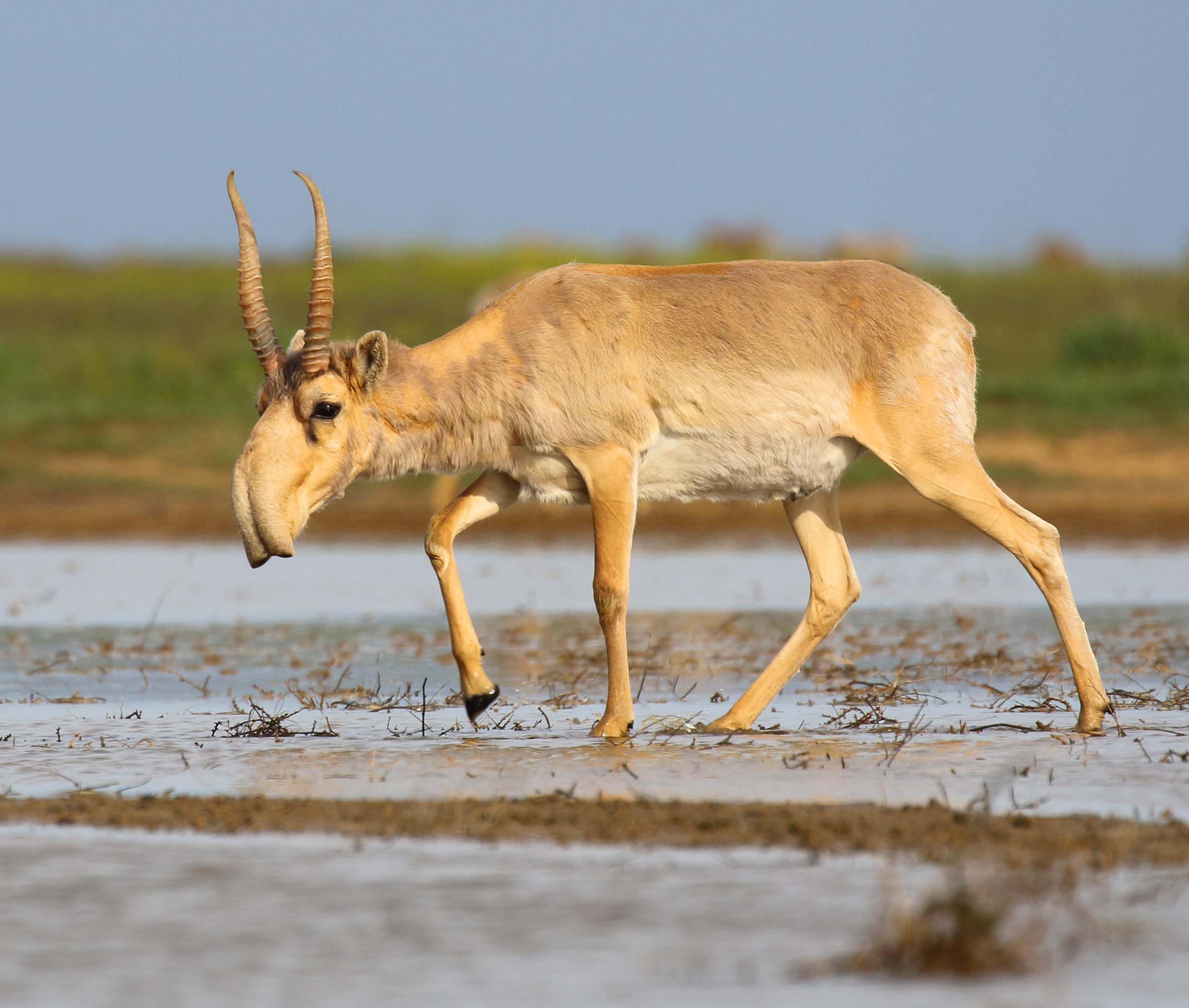
A rare upward count for a critically endangered antelope
Conservationists counting saiga antelope across western Mongolia have returned with unusually welcome news. WWF-Mongolia's latest line-transect survey, conducted across four provinces that make up the Mongolian saiga's entire known range, put the national population at roughly 28,857 animals — a 24% rise over the previous year's tally, according to the organization's report published this week.
For a species classified as Critically Endangered on the IUCN Red List, any sustained increase is significant. The saiga — Saiga tatarica — is one of the most recognizable symbols of the Eurasian steppe, instantly identifiable by its bulbous, trunk-like nose adapted for filtering dust and warming frigid air. The Mongolian subspecies survives only in the country's far west, a holdout population geographically and genetically distinct from the much larger herds in Kazakhstan and Russia's Kalmykia and Astrakhan regions.

What the survey actually measured
WWF-Mongolia's teams used standardized line-transect methodology, a technique that involves walking or driving fixed routes and recording animal sightings at measured distances to estimate density across the broader landscape. Running the survey annually in the same four provinces allows researchers to track trends rather than rely on a single snapshot, and this year's count builds on a monitoring effort that has continued for years despite the region's logistical challenges — vast distances, harsh winters, and sparse infrastructure.
The organization attributes the rebound to sustained anti-poaching patrols, habitat monitoring, and community engagement work across the animal's range. It is a modest but meaningful counterpoint to a species history littered with population crashes.
What this means for saiga conservation
A 24% year-on-year increase does not erase decades of decline. Saiga populations globally have experienced some of the most dramatic boom-and-bust cycles recorded in any large mammal, driven by a combination of pressures that rarely let up for long:
- Poaching for horns — Male saiga horns are trafficked into traditional medicine markets, and selective removal of males has skewed sex ratios in some populations, undermining breeding success.
- Habitat fragmentation — Expanding agriculture, fencing, and infrastructure such as roads and rail lines cut across historic migration corridors the species depends on to reach seasonal grazing and water.
- Disease outbreaks — Mass mortality events, including a catastrophic die-off in Kazakhstan in 2015 that killed well over half of one population in a matter of weeks, remain a persistent and poorly predictable risk.
- Climate volatility — Harsh winters known locally as "dzud" in Mongolia can bury forage under ice and snow, causing starvation across entire herds in a single season.
Against that backdrop, a one-year gain is encouraging but fragile. Conservation biologists generally caution that saiga numbers can swing wildly from year to year, and sustained, multi-year trends matter more than any single survey result. Still, WWF-Mongolia frames the increase as evidence that coordinated patrol work and habitat protection across the four-province range are paying measurable dividends.
The wider picture for a steppe survivor
The saiga's story stretches back tens of thousands of years. During the Pleistocene, the species ranged across the mammoth steppe from the British Isles to Beringia, sharing the landscape with woolly mammoths and cave lions. Its range has since collapsed to a handful of fragmented pockets: Kalmykia and Astrakhan Oblast in Russia, the Ural Mountains, Ustyurt Plateau, and Betpak-Dala regions of Kazakhstan, with a portion of the Ustyurt population migrating seasonally into Uzbekistan and occasionally Turkmenistan. The species is now regionally extinct in Romania, Ukraine, Moldova, China, and southwestern Mongolia.
That contraction is why isolated populations like Mongolia's carry outsized conservation weight. Losing the Mongolian subspecies would not just shrink the species' total numbers — it would eliminate a genetically and geographically distinct lineage adapted to a specific corner of the steppe, narrowing the saiga's resilience to future shocks.
Why population counts matter for Red List status
IUCN Red List assessments weigh population trend alongside overall numbers, range size, and threat severity. A single good year is unlikely to shift the saiga's Critically Endangered classification on its own, but repeated increases across multiple range states, paired with evidence that poaching and disease pressures are easing, could eventually support a reassessment. For now, researchers describe the Mongolian figures as a hopeful data point within a status that remains precarious.
Outlook
WWF-Mongolia says it plans to continue annual surveys and expand patrol coverage, while also working with herding communities on measures to reduce human-wildlife conflict and keep migration corridors open. Conservation groups across the saiga's range have also increasingly coordinated disease surveillance, given how quickly outbreaks can erase years of population gains. Whether this year's rise in Mongolia proves to be the start of a longer recovery or a temporary high point will depend heavily on what the next several surveys show.
Frequently Asked Questions
How many saiga are left in Mongolia?
WWF-Mongolia's most recent line-transect survey estimated approximately 28,857 saiga across the four provinces that make up the subspecies' entire national range, up 24% from the previous year's count.
What is the saiga's IUCN Red List status?
The saiga, Saiga tatarica, is listed as Critically Endangered, reflecting historic population crashes driven by poaching, disease outbreaks, and habitat loss across its Eurasian range.
Where else do saiga live besides Mongolia?
Saiga persist in Kalmykia and Astrakhan Oblast in Russia and in the Ural Mountains, Ustyurt Plateau, and Betpak-Dala regions of Kazakhstan, with some Ustyurt animals migrating into Uzbekistan and occasionally Turkmenistan in winter.
Why do saiga populations fluctuate so much?
Their reproductive biology allows rapid rebounds in good years, but disease outbreaks, severe winters, and poaching can cause steep die-offs within weeks, making year-to-year counts highly variable even when long-term trends are positive.
Get weekly conservation intelligence
One short digest a week of the most striking species and country data we ship, plus breaking conservation news paired with our database where it matters.
Free, no spam. One-click unsubscribe in every email.