Saiga: Kazakhstan's Rebound Sparks New Fight
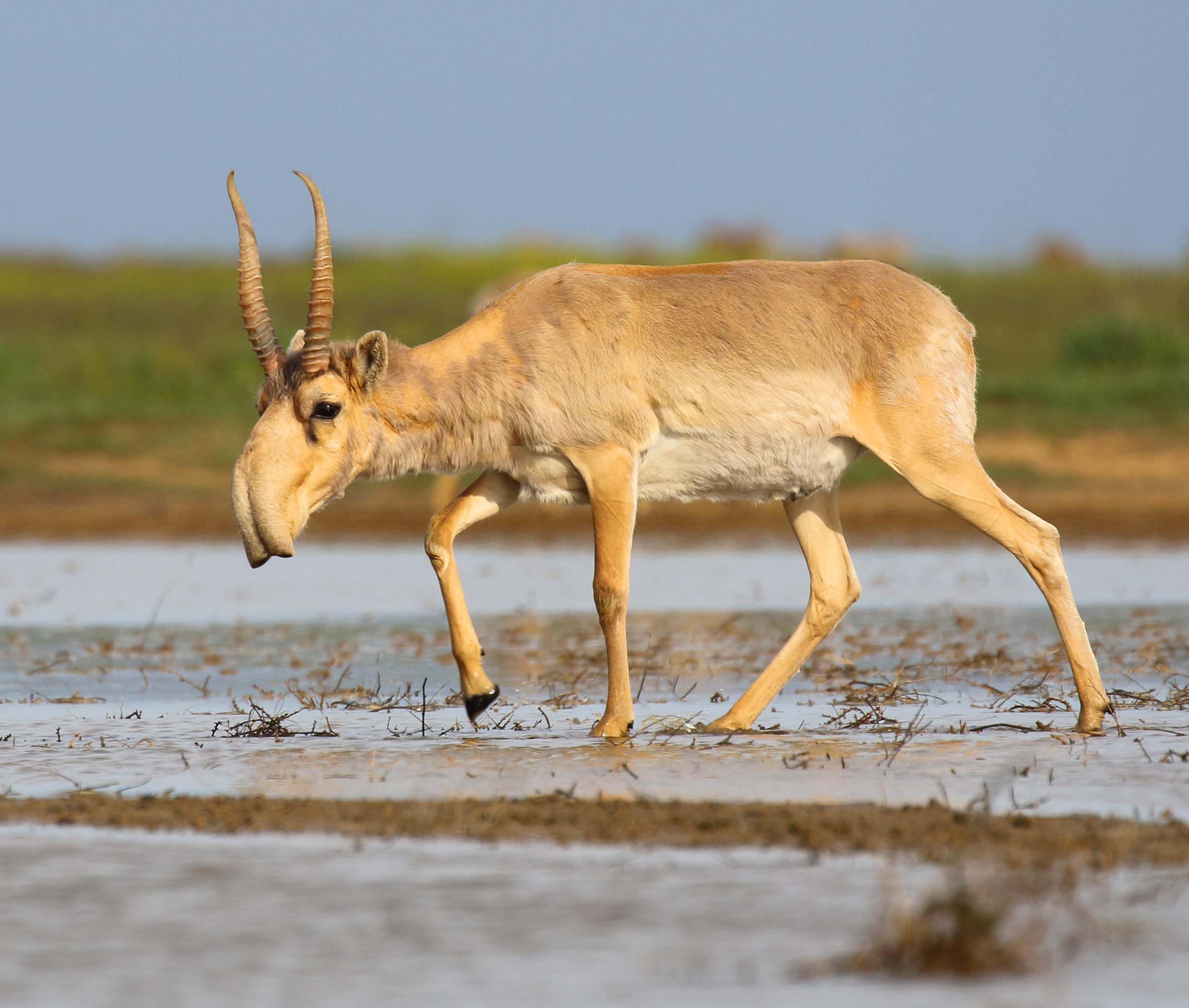
A Rare Conservation Rebound Hits a New Snag
Few species on Earth have fallen as fast, or climbed back as sharply, as the saiga antelope. A spring 2026 aerial survey across Kazakhstan's steppe put the national saiga population at close to 4.7 million animals, an increase of roughly 18 percent over the previous year's count, according to reporting from The Planet Brief. For a species that was teetering near collapse within living memory, that figure represents one of the most dramatic ungulate recoveries ever documented.
But the news carries an ironic twist. The very success of Kazakhstan's saiga conservation effort is now colliding with farmland, livestock corridors, and rural livelihoods, forcing wildlife managers to confront a problem few expected to face this soon: what happens when a critically endangered species recovers faster than the landscape around it can absorb.
The saiga remains classified as Critically Endangered on the IUCN Red List, a status that reflects the species' volatile recent history rather than its current headcount in Kazakhstan alone. Saiga populations are notorious for extreme boom-and-bust cycles, and the global Red List assessment accounts for the species' vulnerability to disease, poaching, and habitat disruption across its full range, which once stretched from the Carpathians to Mongolia.

How the Species Collapsed and Then Clawed Back
To understand why a nearly five-million-strong herd is still labeled Critically Endangered, it helps to look at the saiga's recent past. Poaching for the species' distinctive horns, prized in traditional medicine markets, decimated populations through the 1990s and 2000s. Disease has been equally devastating: mass die-off events, including a catastrophic bacterial outbreak in 2015 that killed well over half the Betpak-Dala population within weeks, demonstrated how quickly gains can be erased. Habitat loss from agricultural expansion and infrastructure development compounds these pressures, fragmenting migration corridors that saiga herds rely on to reach seasonal grazing grounds.
Kazakhstan's government, working with conservation groups and international partners, responded with intensified anti-poaching patrols, habitat protections, and population monitoring across the Ural, Ustyurt, and Betpak-Dala regions. Those efforts, combined with a run of favorable breeding seasons, appear to be paying off in a way that now outpaces expectations.
What This Means for Kazakhstan's Rangelands
A near-fivefold concentration of grazing animals returning to the steppe does not happen in isolation. Farmers in regions bordering saiga range have reported herds moving onto cultivated land in search of forage, damaging crops and competing with livestock for grazing space. Fencing, vehicle traffic, and expanding settlements have also altered migration routes that saiga have used for millennia, pushing animals into closer contact with human activity than conservation planners anticipated.
This is, in many respects, a good problem to have. Few Critically Endangered species ever present wildlife managers with an overabundance dilemma. Yet the stakes are real for rural communities whose economic security depends on predictable grazing and harvests. Kazakhstan's wildlife authorities are now exploring measures that balance the species' continued recovery with the practical needs of agricultural regions, including:
- Expanding fenced wildlife corridors and crossing points to reduce saiga incursions onto farmland
- Compensation schemes for farmers experiencing crop or pasture damage from migrating herds
- Refined population monitoring to track distribution shifts in near-real time, rather than relying solely on annual aerial counts
- Continued anti-poaching enforcement to ensure gains are not reversed by renewed horn trafficking as herd density rises
A Fragile Recovery, Not a Finished Story
Conservationists caution against reading the survey results as a sign the saiga crisis is over. The species' historical range has already contracted drastically, with regional extinctions recorded in Romania, Ukraine, Moldova, China, and southwestern Mongolia. Only a handful of strongholds remain: Kalmykia and Astrakhan Oblast in Russia, and the Ural, Ustyurt, and Betpak-Dala populations in Kazakhstan, with a separate, much smaller subspecies persisting in western Mongolia. A portion of the Ustyurt population still migrates seasonally into Uzbekistan and occasionally Turkmenistan.
Disease remains the wildcard. The bacterium responsible for past mass mortality events, Pasteurella multocida, can trigger outbreaks under specific climatic conditions, meaning a population boom today offers no guarantee against a sudden crash tomorrow. Denser herds sharing forage and water sources can, in fact, make such outbreaks more likely rather than less.

Outlook: Managing Success Without Repeating Past Mistakes
The challenge now facing Kazakhstan is less about preventing extinction and more about managing abundance responsibly, a shift that conservationists in other recovery stories, from American bison to southern white rhino, have navigated with mixed results. Getting it right will likely require sustained investment in human-wildlife conflict mitigation, transparent data sharing between herders and wildlife agencies, and continued vigilance against poaching networks that could exploit a larger, more visible population.
If Kazakhstan can thread that needle, the saiga's story may yet become a rare template for recovering a Critically Endangered species without triggering a new round of conflict or collapse.
Frequently Asked Questions
Why is the saiga still Critically Endangered if numbers are rising?
The IUCN Red List status reflects the species' history of extreme population swings, disease vulnerability, and range-wide decline, not just the current Kazakhstan count. Rapid reversals have happened before, including a mass die-off in 2015.
What is causing the human-wildlife conflict in Kazakhstan?
Expanding saiga herds are moving onto farmland and competing with livestock for grazing land, partly because growing populations are intersecting with agricultural development and altered migration routes.
Where do saiga still live today?
Populations persist in Kalmykia and Astrakhan Oblast in Russia, and in the Ural Mountains, Ustyurt Plateau, and Betpak-Dala regions of Kazakhstan, with a separate subspecies in western Mongolia. The species is regionally extinct in Romania, Ukraine, Moldova, China, and southwestern Mongolia.
What could threaten the recovery going forward?
Disease outbreaks, renewed poaching for horns, and habitat fragmentation from agricultural and infrastructure expansion all remain significant risks even as overall numbers climb.
Get weekly conservation intelligence
One short digest a week of the most striking species and country data we ship, plus breaking conservation news paired with our database where it matters.
Free, no spam. One-click unsubscribe in every email.