Saiga Antelope Steps Back From the Brink
A Rare Piece of Good News for the Steppe
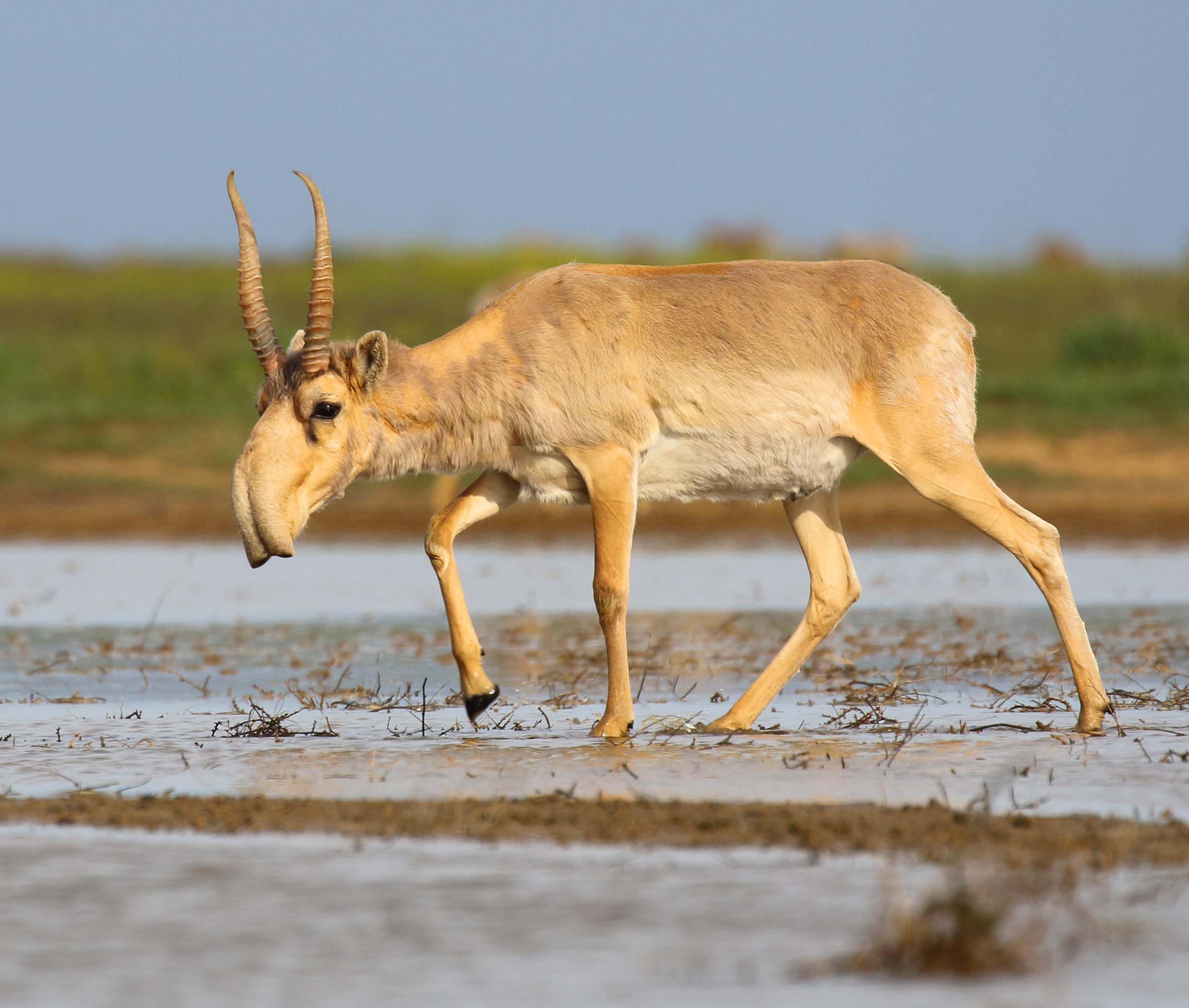
For an animal that has survived ice ages, mammoth-steppe predators, and the collapse of the Soviet Union, the saiga antelope has endured an unusually brutal few decades. Now comes a genuinely rare announcement in conservation circles: the species has been reassessed and moved off the IUCN's critical category, according to Fauna & Flora and its Kazakhstan-based partner organisation ACBK.
The shift follows years of coordinated anti-poaching patrols, habitat protection, and population monitoring across Kazakhstan's vast steppe landscapes, where the bulk of the world's saiga now live. It marks one of the few large-mammal recoveries of this scale in recent memory, and conservationists are treating it as proof that sustained, well-funded fieldwork can reverse even the steepest population crashes.
In SpeciesRadar's own database, the saiga (Saiga tatarica) is still listed under the IUCN's Critically Endangered category, a classification that reflects the catastrophic collapse the species suffered through the late 1990s and 2000s. That listing underscores just how severe the starting point was — and why the new downgrade, while welcome, is being described by experts as a milestone rather than a finish line. You can track the species' full profile and historical status at /species/saiga.
What a Status Change Actually Means
IUCN Red List categories are not simply a label — they're a structured risk assessment built on population trends, range size, and the severity of ongoing threats. Moving a species out of the Critically Endangered tier signals that assessors now see a measurably lower extinction risk over the near term, typically driven by documented population growth, range stabilisation, or a reduction in the intensity of key threats.
For the saiga, that improvement traces directly to field-level interventions:
- Expanded ranger patrols across core calving and migration grounds in Kazakhstan, reducing poaching pressure on herds
- Community-based monitoring, with local partners like ACBK tracking births, die-offs, and seasonal movements in near real time
- Cross-border coordination addressing the species' long migratory routes, which span Kazakhstan, Russia, and parts of Central Asia
- Rapid-response disease surveillance following the mass mortality events that have periodically wiped out large portions of regional populations
Fauna & Flora's reporting frames this as a genuine conservation success story, but one layered with caution. A downgrade in status reduces the sense of emergency, yet the underlying vulnerabilities — poaching economics, fragmented habitat, and disease risk — haven't disappeared. They've simply been pushed back, for now.
The Species' Wider Story
The saiga's history is almost geologically strange. During the Pleistocene, these antelope ranged across the mammoth steppe from the British Isles to Beringia, sharing the landscape with woolly rhinos and mammoths. Its range has contracted dramatically since antiquity, when it stretched from the Carpathian foothills into Mongolia and Dzungaria.
Today the dominant subspecies survives only in Kalmykia and Astrakhan Oblast in Russia, and across the Ural Mountains, Ustyurt Plateau, and Betpak-Dala regions of Kazakhstan, with a portion of the Ustyurt population migrating seasonally into Uzbekistan and occasionally Turkmenistan. The species is now regionally extinct in Romania, Ukraine, Moldova, China, and southwestern Mongolia — a sobering list that illustrates how much range has been lost even as the Kazakhstan population recovers. A distinct Mongolian subspecies clings on separately in the country's western reaches.
Why the Horns Are the Core Problem
Much of the species' historical collapse traces to a single driver: illegal hunting for saiga horns, which are prized in traditional medicine markets. Because only males carry horns, sustained poaching skews population sex ratios, undermining breeding even when overall numbers appear to recover. Layered on top of that pressure are habitat losses from agricultural expansion and infrastructure development, plus climate-linked stress on the grassland ecosystems saiga depend on for seasonal grazing. Periodic disease outbreaks — some linked to environmental and climatic triggers — have added sudden, catastrophic mortality spikes to an already fragile recovery curve.
What Comes Next
Conservation groups working in the region are using this reassessment as a platform to push for continued, not reduced, investment. The consensus among field partners is that the status change reflects real progress in Kazakhstan specifically, rather than a uniform recovery across the saiga's entire historical and current range. Russian and Mongolian populations remain more precarious, and cross-border poaching networks can quickly erode gains made in any single country.
Fauna & Flora's own account of the milestone, available via their full report, stresses that long-term survival still hinges on curbing illegal horn trade, managing disease risk, and protecting migratory corridors from further fragmentation. In other words: the hardest-won gains are also the easiest to lose. Explore the full profile and conservation data for Saiga (CR) on SpeciesRadar. Source: original report.
Frequently Asked Questions
What does it mean that the saiga is "off the critical list"?
It means IUCN assessors have judged the species' extinction risk to be lower than the Critically Endangered threshold, based on documented population recovery and reduced threat intensity, primarily in Kazakhstan.
Is the saiga still endangered?
Yes. Even with this improvement, the species remains at meaningful risk from poaching, disease outbreaks, and habitat fragmentation, and different regional populations face very different levels of threat.
Why are saiga horns such a major threat?
Saiga horns are harvested for use in traditional medicine markets, and because only males grow horns, targeted poaching distorts breeding ratios and slows population recovery even when total numbers rise.
Where do saiga live today?
Populations persist in Russia's Kalmykia and Astrakhan Oblast, and in Kazakhstan's Ural Mountains, Ustyurt Plateau, and Betpak-Dala regions, with a separate subspecies in western Mongolia; the species is regionally extinct across much of its historical Eurasian range.
Get weekly conservation intelligence
One short digest a week of the most striking species and country data we ship, plus breaking conservation news paired with our database where it matters.
Free, no spam. One-click unsubscribe in every email.