Poweshiek Skipperling: A Rare Win
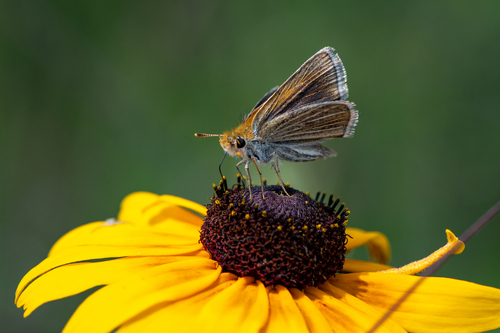
A glimmer of hope from the prairie
For one of the rarest butterflies in North America, good news has been scarce for decades. But a captive breeding and conservation initiative at John Ball Zoo in Grand Rapids, Michigan, is reporting encouraging progress toward recovering the Poweshiek skipperling, a species so depleted that researchers once feared it might vanish before any rescue effort could take hold.
According to the zoo, its conservation team has seen measurable gains in a program designed to breed the butterfly in managed care and eventually bolster wild populations clinging to survival in fragmented prairie remnants. The species, scientifically known as Oarisma powesheik, is classified as Critically Endangered by the IUCN Red List — the last stop before extinction in the wild. Precise population figures remain difficult to pin down because the skipperling now persists in such scattered, low-density pockets, but experts broadly agree that only a handful of sites across its former range still host any individuals at all.

What this breeding progress actually means
Captive breeding of small, habitat-specialist insects like the Poweshiek skipperling is notoriously difficult. Unlike larger, more adaptable species, this butterfly has a short adult flight period, exacting larval host-plant needs, and a life cycle tightly synchronized with prairie seasonal rhythms. Replicating those conditions indoors — temperature, humidity, day length, and the right native grasses for caterpillars to feed on — requires painstaking trial and error.
That is precisely why John Ball Zoo's reported progress matters. Successfully rearing individuals through more life stages in captivity suggests conservation biologists are closing in on the husbandry formula needed to produce butterflies that can eventually be released or used to found new semi-wild colonies. Zoos and partner institutions involved in Poweshiek recovery have spent years refining rearing protocols, and incremental improvements — higher survival rates among larvae, successful overwintering, or increased egg viability — represent real, hard-won steps rather than symbolic gestures.
It is worth being clear-eyed about scale: a breeding success at one zoo does not undo decades of habitat loss across the Upper Midwest and southeastern Canada. But for a species this close to the edge, every cohort of captive-bred butterflies adds genetic insurance and buys time for habitat restoration efforts to catch up.
Why this butterfly disappeared so fast
The Poweshiek skipperling's collapse has been staggeringly swift by butterfly standards. Just a few decades ago it was considered one of the more common prairie skippers in parts of its range. Today, wild sightings are confined to a tiny fraction of historic sites in Michigan and Manitoba, with populations in Iowa, Minnesota, Wisconsin, and the Dakotas largely or entirely extirpated.
- Habitat conversion: Tallgrass prairie, one of the most reduced ecosystems in North America, has been plowed for agriculture or paved over for development, leaving the skipperling's required grasses in isolated fragments.
- Fire suppression: Historically, periodic natural and Indigenous-managed fires kept prairies open and diverse; without them, woody plants and invasive species crowd out native grasses the caterpillars depend on.
- Limited dispersal ability: Adults rarely travel far from where they hatch, meaning that once a prairie patch disappears or degrades, the local population has little chance of recolonizing from elsewhere.
- Climate volatility: Shifting precipitation and temperature patterns are altering the timing of prairie plant growth, potentially desynchronizing it from the butterfly's narrow larval feeding window.
The wider conservation picture
The skipperling's plight is emblematic of a broader crisis facing tallgrass prairie specialists. Less than a few percent of original tallgrass prairie remains in North America, and the species that evolved alongside it — from prairie chickens to native bumblebees — face similarly steep declines. Butterflies in particular are useful bellwethers because their life cycles are so tightly bound to specific plants and microhabitats; when they disappear, it often signals deeper ecological unraveling.
Captive breeding programs for insects remain rare compared with those for birds and mammals, partly because insects have historically received less conservation funding and public attention despite their outsized ecological roles as pollinators and prey species. The John Ball Zoo effort, developed alongside other institutions and agencies working on Poweshiek recovery, reflects a growing recognition that insect conservation deserves the same rigor applied to charismatic vertebrates.

What comes next
Recovery for the Poweshiek skipperling will depend on pairing captive breeding with aggressive habitat protection and restoration. Conservationists are working to expand protected prairie remnants, reintroduce controlled burning regimes, and eventually use captive-reared butterflies to supplement or re-establish wild colonies once suitable habitat is secured. None of this happens quickly, but the zoo's reported gains suggest the biological puzzle of captive rearing is becoming more solvable — a critical prerequisite for any reintroduction strategy.
For now, conservationists describe the work as cautiously hopeful rather than a declaration of victory. The species remains critically endangered, and its long-term fate still hinges on how much tallgrass prairie can be saved, restored, and reconnected across its historic range.
Frequently Asked Questions
What is the Poweshiek skipperling and where does it live?
It is a small butterfly native to tallgrass prairie in the Upper Midwest United States and southeastern Manitoba, Canada, with a wingspan of roughly 19 to 25 millimeters and distinctive orange-brown coloring.
Why is the species critically endangered?
Decades of prairie habitat loss from agriculture and development, combined with fire suppression and the butterfly's limited dispersal ability, have driven dramatic population declines across nearly its entire historic range.
What is John Ball Zoo doing to help?
The zoo runs a captive breeding and conservation program aimed at rearing Poweshiek skipperlings and supporting future efforts to bolster or re-establish wild populations, as detailed in its original report.
Can captive breeding alone save the species?
No — experts stress that breeding success must be paired with restoring and protecting native tallgrass prairie habitat, since released butterflies need suitable, fire-managed grassland to survive long term.
Get weekly conservation intelligence
One short digest a week of the most striking species and country data we ship, plus breaking conservation news paired with our database where it matters.
Free, no spam. One-click unsubscribe in every email.