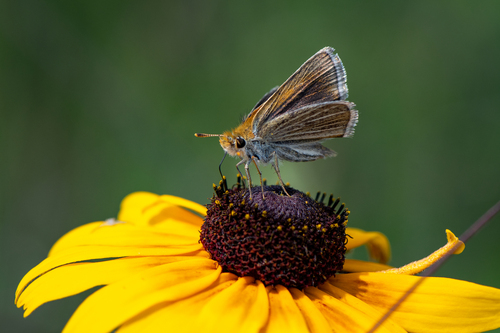
Poweshiek Skipperling
Oarisma powesheik
Photo: (c) Kirstyn Eckhardt, some rights reserved (CC BY-NC), uploaded by Kirstyn Eckhardt
Overview
Oarisma powesheik, commonly known as the Poweshiek skipperling, is a small butterfly species endemic to the tallgrass prairie ecosystems of North America. This diminutive skipper, with a wingspan of approximately 19-25 millimeters, was historically found across portions of the upper Midwest United States and southeastern Canada, including Iowa, Minnesota, Wisconsin, Michigan, North Dakota, South Dakota, and Manitoba. The species exhibits a distinctive orange-brown coloration with darker markings and is closely associated with native prairie grasses.
The Poweshiek skipperling has experienced catastrophic population declines over the past several decades, leading to its classification as Critically Endangered. Primary threats include widespread habitat loss due to agricultural conversion, urban development, and the suppression of natural fire cycles that maintain prairie ecosystems. The species' highly specialized habitat requirements and limited dispersal ability have made it particularly vulnerable to landscape fragmentation.
Climate change poses additional challenges through altered precipitation patterns and temperature regimes that affect both the butterfly and its host plants. Conservation efforts focus on habitat restoration and management of remaining prairie remnants, including prescribed burning and invasive species control. Captive breeding programs have been established to maintain genetic diversity and provide individuals for potential reintroduction efforts.
Collaborative research between government agencies, universities, and conservation organizations continues to study the species' ecology and develop effective management strategies for the few remaining populations.
The Poweshiek skipperling faces severe threats from habitat loss due to agricultural conversion and urban development of native tallgrass prairie. Additional pressures include fire suppression that disrupts natural prairie maintenance cycles and climate change impacts on prairie ecosystems. The species' specialized habitat requirements and limited mobility make it extremely vulnerable to landscape fragmentation.
Habitat
The Poweshiek skipperling inhabits native tallgrass prairie ecosystems, particularly areas with diverse native grass species and forbs. The species requires high-quality prairie remnants with specific microclimatic conditions and is dependent on natural disturbance regimes such as periodic fires.
Conservation measures underway
Other threatened species in HESPERIIDAE

Threatened in United States
Frequently asked questions
Why is Poweshiek Skipperling classified as Critically Endangered?
Where does Poweshiek Skipperling live?
What are the main threats to Poweshiek Skipperling?
Get weekly conservation intelligence
One short digest a week of the most striking species and country data we ship, plus breaking conservation news paired with our database where it matters.
Free, no spam. One-click unsubscribe in every email.