Pale Lilliput: Mussels Return to Paint Rock
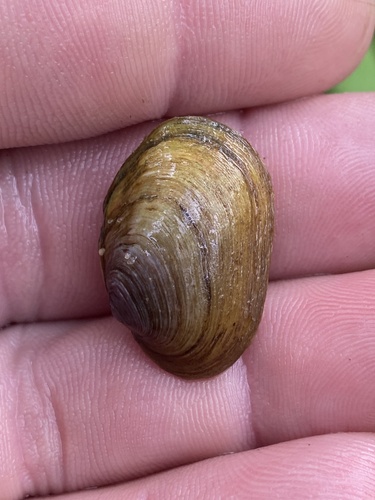
A River Gets Its Mussels Back
On the Paint Rock River in northeastern Alabama, a quiet but consequential act of restoration has taken place. Wildlife biologists, federal agencies, and local conservation partners released roughly 1,500 rare native mussels into the waterway, among them the Pale Lilliput (Toxolasma cylindrellum), a species so imperiled that it carries the IUCN Red List's highest pre-extinction designation: Critically Endangered.
The release, reported by Outdoor Alabama, capped years of captive propagation work led by state and federal hatcheries. What makes this moment genuinely notable isn't just the number of animals returned to the river — it's confirmation that some of them are surviving, growing, and reproducing. Biologists verified recruitment, meaning young mussels are being recorded in the wild, and reproducing populations now exist in multiple stretches of the river. For a species once feared to be sliding toward disappearance, that is about as close to good news as freshwater conservation gets.
The Pale Lilliput is a small, unassuming animal — its shell rarely exceeds 40 millimeters, pale yellowish in color, easy to overlook even by people wading the riverbed looking for it. Historically it ranged across parts of Alabama, Georgia, and Tennessee, but decades of habitat loss shrank its range dramatically. You can read more about the species' biology and status on its SpeciesRadar profile.

What This Means for the Species
Freshwater mussels are notoriously difficult to bring back once a population collapses, largely because of their life cycle. Pale Lilliput larvae, like those of most native mussels, must attach to the gills or fins of a specific host fish species to complete development before dropping off as juveniles. That dependency means a mussel reintroduction is never just about the mussel — it requires a functioning river with the right fish, clean substrate, and stable flows all present at once.
That's why officials and partners frame this as a village effort. Restoring habitat conditions on the Paint Rock, including reducing sedimentation and stabilizing streambanks, had to happen before mussels released from hatcheries stood any real chance of persisting. The verified recruitment now being documented suggests those habitat investments are paying off, at least in the sections monitored so far.
Why Recruitment Is the Real Milestone
Releasing captive-bred animals into a river is a reversible-seeming headline, but recruitment is the number that matters biologically. Any population can look stable for a few years on released individuals alone; what determines long-term viability is whether those adults are finding hosts, producing larvae, and seeing juveniles survive to detectable size. Confirmation of reproducing populations across several river reaches indicates the Paint Rock is functioning as genuine habitat again, not just a holding pond for hatchery stock.
- Roughly 1,500 rare native mussels were released into the Paint Rock River, including the Pale Lilliput
- Biologists confirmed verified recruitment, meaning wild-born juveniles are now present
- Reproducing populations have been documented in multiple sections of the river
- The effort relied on years of captive breeding before any animals were returned to the wild
The Wider Picture for Freshwater Mussels
The Southeastern United States holds the highest diversity of freshwater mussels on Earth, and also some of the steepest declines. Dams fragment rivers and alter the natural flow and temperature regimes mussels evolved with. Agricultural and urban runoff degrades water quality, while sediment from land clearing can smother mussel beds and eliminate the stable gravel and sand substrates species like the Pale Lilliput depend on for feeding and oxygen exchange.
Population figures for the Pale Lilliput remain unknown in precise terms, a reflection of how sparse and difficult-to-survey its remaining range has become. That uncertainty is itself telling: when a species' numbers are too low or too scattered to reliably count, reintroduction and habitat restoration become not just useful tools but often the only realistic path toward recovery. The Paint Rock effort represents exactly that kind of intervention, pairing captive propagation with on-the-ground river repair.

Looking Ahead
No one involved in the Paint Rock project is calling the Pale Lilliput saved. Critically Endangered species can take decades of sustained monitoring before biologists are confident a population is self-sustaining without further intervention. Future breeding cycles, continued host-fish availability, and protection from new pollution or sediment sources will all determine whether this year's recruitment becomes a durable trend rather than a one-off success.
Still, the verified reproduction documented this year gives conservationists something rare in freshwater mussel work: a tangible, measurable sign that restoration is translating into biology, not just optimism. Continued partnership between state wildlife agencies, the U.S. Fish and Wildlife Service, and local stakeholders along the Paint Rock watershed will likely determine whether this becomes a model replicated on other Southeastern rivers facing similar mussel declines.
Frequently Asked Questions
What is the Pale Lilliput and why is it endangered?
The Pale Lilliput (Toxolasma cylindrellum) is a small freshwater mussel native to the Southeastern U.S., currently listed as Critically Endangered due to habitat degradation, dam construction, pollution, and sedimentation across its historic range.
Why did biologists release mussels into the Paint Rock River?
The release aimed to reestablish Pale Lilliput and other rare native mussel populations in a river where habitat restoration work had improved water quality and substrate conditions enough to support them again.
What does "verified recruitment" mean for this species?
It means biologists have documented wild-born juvenile mussels in the river, confirming that released adults are successfully reproducing rather than simply surviving as a static, non-reproducing population.
Is the Pale Lilliput population recovering?
Early signs are encouraging, with reproducing populations found in multiple river sections, but long-term recovery for a Critically Endangered species like this typically requires years of continued monitoring before conservationists consider it secure.
Get weekly conservation intelligence
One short digest a week of the most striking species and country data we ship, plus breaking conservation news paired with our database where it matters.
Free, no spam. One-click unsubscribe in every email.