Kākāpō: Record 105 Chicks Hatch in 2026
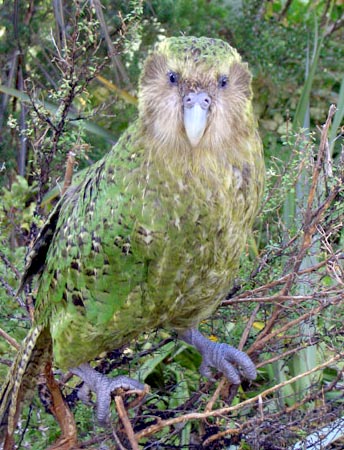
A record season for the world's heaviest parrot
New Zealand's Department of Conservation has confirmed the most successful breeding season on record for the kākāpō, the flightless, nocturnal parrot once reduced to a handful of survivors. In 2026, 105 chicks hatched from 256 eggs laid across the species' predator-free island sanctuaries — the highest total logged in three decades of close monitoring, according to Live Science.
For a bird that breeds only when rimu trees mast — producing the fruit crop that triggers mating — this kind of season doesn't come often. Kākāpō females typically nest just once every two to four years, waiting for forests to deliver the exact conditions their chicks need to survive. When that rare alignment happens, as it did this year, conservationists treat it as a narrow and precious window to rebuild a population that nearly vanished entirely.

The kākāpō, scientific name Strigops habroptilus, is classified as Critically Endangered on the IUCN Red List, the category reserved for species facing an extremely high risk of extinction in the wild. You can view the species' full profile on the kākāpō species page, where its status and recovery data are tracked alongside thousands of other at-risk birds. Decades ago, the entire global population had fallen into double digits, making this the kind of species where every clutch, every egg, every surviving chick genuinely moves the needle.
What this breeding boom actually means
A single record season does not erase a century of decline, but it does something conservation biologists consider just as important: it buys time and builds genetic depth. Kākāpō recovery has long been bottlenecked not just by low numbers but by the species' glacial reproductive pace. Unlike many birds that nest annually, kākāpō are tied to the unpredictable fruiting cycles of rimu and other native trees, meaning population managers cannot simply "encourage" more breeding in off years — they can only intervene to maximize success when nature provides the opportunity.
That intervention is intensive. New Zealand's Department of Conservation and its partners monitor nests individually, sometimes hand-rearing chicks, supplementary feeding females to boost clutch sizes, and relocating eggs between nests to balance survival odds. A season with 256 eggs and 105 hatchlings reflects not just a good mast year but years of refined management layered on top of it.
Why predator-free islands are the key variable
The entire kākāpō population now lives on a small number of offshore islands and fenced sanctuaries that have been cleared of introduced predators. This matters enormously, because the species' biggest threat has never really been food scarcity — it's predation. Ground-nesting and flightless, kākāpō evolved in a landscape with no mammalian predators at all, leaving them defensively helpless against stoats, rats, and cats introduced after human settlement. On predator-free islands, chicks that would otherwise be picked off in the nest get the chance to simply grow up.
The wider threats still facing the species
Even with a record season, the kākāpō's underlying vulnerabilities remain unchanged. The species' recovery story is as much about managing risk as celebrating gains, and conservationists are candid that one bad year — a disease outbreak, a predator incursion, a failed mast season — could undo progress quickly.
- Introduced predators: Stoats, cats, and rats remain the single greatest danger to eggs, chicks, and adult kākāpō wherever predator control lapses.
- Habitat loss: Historical deforestation and land conversion across mainland New Zealand eliminated most of the rimu-rich forest kākāpō once depended on, confining the species to a fraction of its former range.
- Slow reproduction: Breeding tied to irregular fruiting cycles every two to four years means population recovery is inherently gradual, with little room to compensate for setbacks.
- Small population bottleneck: Decades at critically low numbers have narrowed genetic diversity, which conservation managers now factor into nest and pairing decisions.

An outlook built on cautious optimism
Conservationists describe the kākāpō's trajectory as a long climb rather than a finished recovery. The species has come back from the brink before — from a known population scraping single digits in the 1990s to the carefully managed islands that sustain it today — but it remains entirely dependent on human intervention. There is no scenario in the near term where kākāpō are reintroduced to unprotected mainland forest without predator control infrastructure in place first.
Still, a record hatch of 105 chicks represents more than a statistic. Each surviving bird adds to a founder population that conservation geneticists monitor individually, often by name. For a species where the entire world's population was once small enough to track as individuals, that kind of growth compounds meaningfully over successive mast years.
Frequently Asked Questions
How many kākāpō chicks hatched in 2026?
New Zealand's Department of Conservation recorded 105 chicks hatched from 256 eggs in the 2026 breeding season, the highest total documented in roughly 30 years of monitoring.
Why do kākāpō breed so rarely?
Kākāpō breeding is tied to the fruiting, or "masting," cycles of rimu and other native trees, which occur irregularly every two to four years. Females generally only attempt to breed when fruit is abundant enough to support chick-rearing.
What is the kākāpō's IUCN status?
The kākāpō (Strigops habroptilus) is listed as Critically Endangered, reflecting its extremely small, intensively managed population confined to predator-free islands.
What is the biggest threat to kākāpō today?
Introduced mammalian predators, particularly stoats, cats, and rats, remain the primary threat, which is why the species now survives only on islands and sanctuaries cleared of these animals.
Get weekly conservation intelligence
One short digest a week of the most striking species and country data we ship, plus breaking conservation news paired with our database where it matters.
Free, no spam. One-click unsubscribe in every email.