Bangka Slow Loris: Found After 100 Years
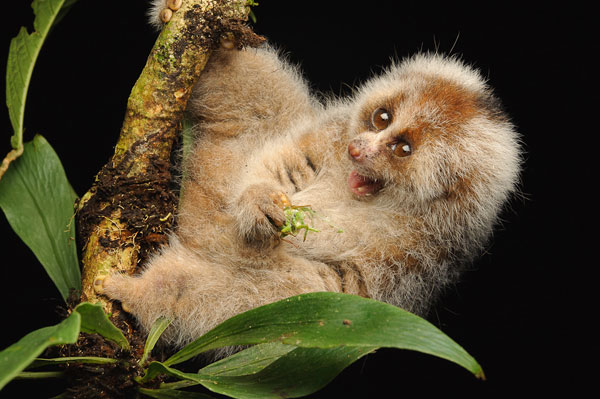
A Ghost Primate Resurfaces on Bangka Island
For nearly one hundred years, the Bangka slow loris existed mostly as a museum specimen and a line item on extinction-risk lists. Now, researchers working on Bangka Island, off the southeastern coast of Sumatra, have confirmed the species is still clinging to survival in the wild — a discovery reported by World Animal News and detailed in the original report.
The confirmation did not come from a single dramatic sighting in the forest. Instead, it emerged from patient detective work: scientists cross-referenced records of dozens of individual lorises that had passed through a local wildlife rescue center over recent years. Those quiet, unglamorous rescue logs turned out to hold the proof that a primate many feared gone had been living alongside people the entire time, undocumented by science since early last century.
Key Finding: The Bangka slow loris is classified Critically Endangered on the IUCN Red List, and until this rediscovery the species had gone without confirmed scientific documentation for nearly 100 years.
Why This Rediscovery Matters
A species going undetected for a century does not necessarily mean it vanished — but it does mean conservationists have been working nearly blind. Without confirmed populations, there is no reliable way to assess habitat needs, estimate numbers, or design protections. This gap is especially dangerous for a primate already carrying the Red List's most serious wild-population warning short of extinction.
The Bangka slow loris, scientific name Nycticebus bancanus, belongs to the broader group of slow lorises centered on Borneo and nearby islands. Related populations, such as the Bornean slow loris described in our species database, share key traits: a nocturnal lifestyle, dense woolly fur in golden to reddish-brown tones, enormous light-gathering eyes, and a rare mammalian trait — a toxic bite produced by secretions from glands near the elbow that mix with saliva. You can read more about this lineage on the Bangka slow loris species profile.
What makes the rediscovery especially poignant is the method. Rather than a triumphant field expedition, it was built from rescue center intake records — evidence that the animals have continued to be captured, trafficked, or displaced in numbers large enough to leave a paper trail, even while scientists lost track of the species in the wild. That tension, between presence and peril, is central to understanding what comes next.
The Threats That Haven't Gone Away
Rediscovery does not equal recovery. The pressures that likely pushed the species out of scientific view for decades remain active today:
- Habitat conversion — palm oil plantation expansion and logging have fragmented and destroyed large stretches of lowland forest across Bangka and the wider Bornean loris range.
- Illegal wildlife trade — the species' wide-eyed, slow-moving appearance makes it a magnet for the exotic pet market, despite the risk its venomous bite poses to handlers.
- Traditional medicine demand — in parts of the region, loris body parts are still believed to carry healing properties, sustaining targeted hunting.
- Lack of baseline data — with so few confirmed sightings for generations, conservationists have lacked the population figures needed to design targeted protections.
The Species' Wider Conservation Picture
Slow lorises as a genus are among the most heavily trafficked primates in Southeast Asia, frequently filmed and shared on social media in ways that mask their suffering and illegal origin. The Bangka population's isolation on a relatively small island makes it particularly vulnerable — there is less forest to retreat into as logging and mining (Bangka is also known for tin extraction) continue to reshape the landscape.
Globally, the IUCN lists the species as Critically Endangered, the last category before Extinct in the Wild. A precise population estimate remains unavailable, a gap that itself underscores how little monitoring has occurred. That data vacuum is part of why the rescue-center records proved so valuable: in the absence of systematic surveys, incidental records of trafficked or injured animals became the clearest window researchers had into the species' continued existence.
Conservation groups working across Indonesia have increasingly leaned on exactly this kind of cross-referencing — combining rescue intake logs, trade seizure reports, and camera-trap incidentals — to patch together status assessments for cryptic, nocturnal, or heavily trafficked species that evade traditional survey methods.
Outlook: Cautious Hope
Confirming survival is the first step, not the finish line. Researchers and local wildlife authorities now face the harder task of locating stable wild populations, protecting remaining forest fragments, and curbing the rescue-center pipeline by addressing trafficking at its source. There is reason for optimism: a species once presumed scientifically lost has demonstrated resilience, and renewed attention from international media and conservation networks could unlock funding for dedicated field surveys.
The story of the Bangka slow loris joins a small but growing list of "lost species" rediscoveries that have energized global conservation funding in recent years. Whether this particular rediscovery leads to a lasting recovery will depend on whether habitat protection and anti-trafficking enforcement follow swiftly.
Frequently Asked Questions
What is the Bangka slow loris?
It is a small nocturnal primate, Nycticebus bancanus, related to the Bornean slow loris lineage, known for its large eyes, woolly fur, and a rare toxic bite produced from glandular secretions.
Why was it considered lost for so long?
No confirmed scientific documentation of the species had occurred for nearly a century, largely because it is nocturnal, elusive, and found in a landscape increasingly difficult to survey due to habitat loss.
How was the species rediscovered?
Researchers confirmed its continued existence by reviewing records of dozens of individual lorises rescued by a local wildlife center, rather than through a single new field sighting.
What is the species' current IUCN status?
The Bangka slow loris is listed as Critically Endangered, with no reliable population estimate currently available, reflecting how little monitoring data exists for the species.
Get weekly conservation intelligence
One short digest a week of the most striking species and country data we ship, plus breaking conservation news paired with our database where it matters.
Free, no spam. One-click unsubscribe in every email.