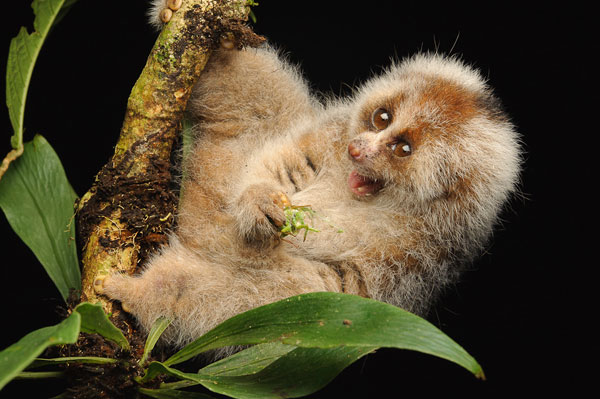
Bangka Slow Loris
Nycticebus bancanus
Photo: Photo: Wikimedia Commons, CC BY-SA
Overview
Nycticebus bancanus, commonly known as the Bornean slow loris, is a small nocturnal primate endemic to the island of Borneo. This diminutive loris weighs approximately 300-700 grams and measures 26-38 centimeters in body length, with dense, woolly fur ranging from golden-brown to reddish-brown coloration. Distinguished by its large, forward-facing eyes adapted for night vision, the species possesses a distinctive dark stripe running from the crown to the lower back, with lighter facial markings around the eyes.
The Bornean slow loris inhabits primary and secondary tropical rainforests across Borneo, including areas of Malaysia, Brunei, and Indonesia, typically residing in the forest canopy at elevations up to 1,500 meters. As an arboreal specialist, it moves deliberately through the trees using a hand-over-hand locomotion, feeding primarily on tree gums, nectar, fruits, and insects. The species exhibits unique defensive behavior by secreting toxins from brachial glands, which when mixed with saliva, creates a venomous bite rare among mammals.
Currently classified as Critically Endangered by the IUCN, Nycticebus bancanus faces severe population declines due to habitat destruction and illegal wildlife trade. The species has experienced dramatic range reductions, with populations becoming increasingly fragmented across Borneo's remaining forest patches. Conservation efforts show promise through protected area establishment in Sabah and Sarawak, while research initiatives are improving understanding of loris ecology and behavior, providing crucial data for targeted protection strategies.
The Bornean slow loris faces severe pressure from palm oil plantation expansion and logging operations that have eliminated vast areas of Borneo's rainforest habitat. Illegal capture for the exotic pet trade represents an additional critical threat, as the species' docile appearance makes it highly sought after despite its venomous bite. Traditional medicine practices also drive hunting pressure, with loris parts believed to possess healing properties in some local cultures.
Habitat
Nycticebus bancanus inhabits the canopy layers of Borneo's tropical rainforests, showing preference for areas with dense vegetation and abundant flowering trees that provide gum and nectar sources. The species adapts to both primary old-growth forests and mature secondary forests, typically avoiding heavily disturbed or edge habitats.
Conservation measures underway
Other threatened species in LORISIDAE

Threatened in Indonesia

Frequently asked questions
Why is Bangka Slow Loris classified as Critically Endangered?
Where does Bangka Slow Loris live?
What are the main threats to Bangka Slow Loris?
Get weekly conservation intelligence
One short digest a week of the most striking species and country data we ship, plus breaking conservation news paired with our database where it matters.
Free, no spam. One-click unsubscribe in every email.