Bangka Slow Loris: Back from the Dead
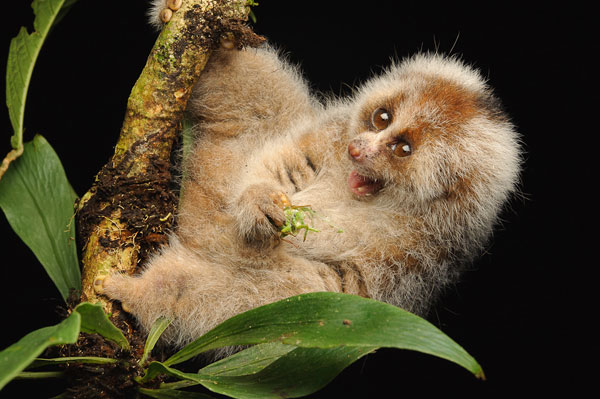
A Ghost Primate Reappears on Bangka Island
For nearly a century, the Bangka slow loris existed mostly as a museum specimen and a line in outdated taxonomic surveys. Scientists last formally documented Nycticebus bancanus in the 1930s on Bangka Island, off the eastern coast of Sumatra, before the species quietly slipped from view. Many researchers assumed it had been swallowed by the same forces reshaping so much of Indonesia's lowland forest — logging, mining, and agricultural conversion. Now, a peer-reviewed study has confirmed what conservationists had barely dared to hope: the species is still out there, clinging on in the island's remaining forest fragments.
The breakthrough didn't come from a dramatic expedition but from patient detective work. Researchers combed through rescue intake records compiled over the past decade by a local wildlife center, which had quietly taken in more than 90 individual lorises handed over by villagers, confiscated from traders, or found injured near plantations. Cross-referencing physical traits and genetic markers with historical specimens, the study authors were able to confirm these animals belonged to the long-lost Bangka population — effectively pulling the species back from the brink of being written off as extinct.

Why the Rediscovery Matters
The Bangka slow loris is currently listed as Critically Endangered on the IUCN Red List, the last category before Extinct in the Wild. Unlike many rediscovered species that turn out to survive in a single remote valley, this population appears to have persisted for decades in plain sight — moving through fragmented forest patches, tin-mining concessions, and smallholder plantations that crisscross the island. That the species survived undetected for so long says as much about how little scientific attention small, nocturnal mammals receive as it does about the animal's resilience.
Conservation scientists describe this as a cautious but genuine ray of hope. A species presumed gone for nearly 90 years has not only been confirmed alive, but the rescue records suggest a population large enough to have sustained ongoing, if quiet, contact with humans — mostly through the illegal wildlife trade. That is both the good news and the warning sign: the same visibility that allowed scientists to confirm the species' survival also reveals how frequently it is being captured and trafficked.
The Species Behind the Headline
The Bangka slow loris belongs to a wider group of slow lorises found across Southeast Asia, all sharing one deeply unusual trait among primates: a venomous bite. The animal produces toxins in glands near its elbows, which it mixes with saliva to create a defensive compound — a rare adaptation that has done little to protect it from humans. If anything, the species' round-eyed, slow-moving appearance has made it a magnet for the exotic pet trade, where its gentle demeanor is prized despite the real risk its bite poses to handlers.
Here is a snapshot of the species' profile, drawn from SpeciesRadar's database:
- IUCN Red List status: Critically Endangered
- Population estimate: Not precisely quantified, though rescue data spanning ten years and more than 90 individuals suggests a small but persistent population
- Primary habitat: Lowland and secondary tropical forest fragments on Bangka Island, Indonesia
- Core threats: Habitat loss from logging, tin mining, and plantation expansion; illegal capture for the pet trade; demand driven by traditional medicine beliefs
- Defining trait: One of the only venomous primates on Earth, secreting toxin from brachial glands
Its closer relative, the Bornean slow loris, faces a strikingly similar set of pressures across Borneo, where palm oil expansion and logging have fragmented much of its canopy habitat. You can explore the full profile of the species, including its physical characteristics and range, on the Bangka slow loris species page.
What Happens Next for the Species
Confirming survival is only the first step. Researchers and the wildlife center involved in the study now face the harder task of translating a rediscovery into durable protection. That means establishing a clearer population count, mapping remaining habitat corridors between forest fragments, and tightening enforcement against the wildlife traders who have been quietly supplying the very rescue center that helped prove the species still exists.
A Familiar Pattern of Threats
The pressures facing the Bangka slow loris mirror a pattern conservationists see across Southeast Asia's small mammals: habitat fragmentation driven by extractive industries, compounded by trade networks that treat rare animals as commodities rather than irreplaceable lineages. Tin mining in particular has reshaped large portions of Bangka Island's landscape, leaving the forest a patchwork rather than a continuous canopy — a serious obstacle for a species that rarely, if ever, descends to the ground.
The original findings were reported by Reuters and carried by Daily Maverick, underscoring how rescue-center records — often an overlooked resource — can rewrite assumptions about a species' fate.
For now, the Bangka slow loris occupies a rare and fragile status: confirmed alive, still Critically Endangered, and entirely dependent on what conservationists do with this second chance.
Frequently Asked Questions
Was the Bangka slow loris truly thought extinct?
It had not been scientifically documented since the 1930s, leading many researchers to fear it was extinct, though it was never formally declared so by the IUCN.
How did scientists confirm it still exists?
They analyzed physical and genetic data from more than 90 rescued individuals collected over a decade by a local wildlife center, matching them against historical specimens from Bangka Island.
What is the biggest threat to the species now?
Habitat loss from mining and logging, combined with illegal capture for the pet trade, remain the dominant pressures on the remaining population.
Is the Bangka slow loris venomous?
Yes. Like other slow loris species, it secretes toxins from glands near its elbows and mixes them with saliva to deliver a venomous bite, an unusual defense among primates.
Get weekly conservation intelligence
One short digest a week of the most striking species and country data we ship, plus breaking conservation news paired with our database where it matters.
Free, no spam. One-click unsubscribe in every email.