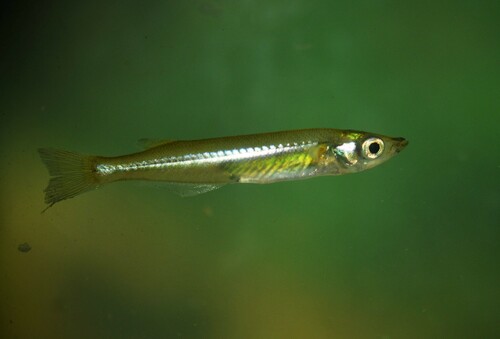
Xenopoecilus sarasinorum
Photo: (c) fachrynurmallojr, some rights reserved (CC BY-NC)
Overview
Oryzias sarasinorum, the Sarasins minnow or Sarasins buntingi, is a species of ricefish in the Adrianichthyidae. It is endemic to Lake Lindu in Lore Lindu National Park, Sulawesi, Indonesia. This species was described as Haplochilus sarasinorum by C.M.L.
Popta in 1905 and she named it in honour of the Swiss naturalists and second cousins Paul Sarasin (1856-1929) and Fritz Sarasin (1859-1942), the latter being the collector of the type. Although the IUCN state that the population of this fish is stabled it is threatened by introduced non native fish, common carp, Mozambique tilapia and walking catfish; and a decline in water quality caused by increased agriculture in the lake's catchment which is causing a decline in water quality, it is therefore assessed as Critically Endangered.
Xenopoecilus sarasinorum faces severe threats from habitat degradation in its restricted range within Sulawesi's ancient lake systems. Agricultural expansion and urban development around lake margins have reduced water quality and eliminated critical spawning areas. The species' extremely limited distribution makes it particularly vulnerable to localized environmental changes, with pollution from agricultural runoff and domestic waste posing ongoing risks to remaining populations.
Habitat
This endemic fish inhabits the shallow, vegetated margins of ancient lakes in Sulawesi, Indonesia, particularly areas with soft substrates and aquatic vegetation. The species requires clean, well-oxygenated waters with stable temperature conditions typical of tropical lake ecosystems.
Conservation measures underway
Other threatened species in ADRIANICHTHYIDAE
Threatened in Indonesia

Frequently asked questions
Why is Xenopoecilus sarasinorum classified as Critically Endangered?
Where does Xenopoecilus sarasinorum live?
What are the main threats to Xenopoecilus sarasinorum?
Get weekly conservation intelligence
One short digest a week of the most striking species and country data we ship, plus breaking conservation news paired with our database where it matters.
Free, no spam. One-click unsubscribe in every email.