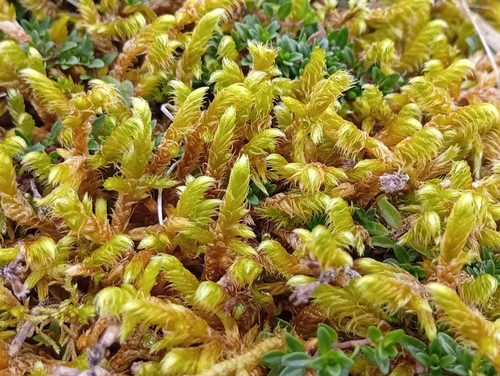
Golden Glade-moss
Rhytidium rugosum
Photo: (c) Daniel Buczkiewicz, some rights reserved (CC BY-SA), uploaded by Daniel Buczkiewicz
Overview
A detailed profile for this species is sourced from the IUCN Red List of Threatened Species as assessments become available.
Wrinkle-leaved Moss faces severe threats from climate change, particularly warming temperatures and altered precipitation patterns that disrupt the cool, moist conditions essential for its survival. Habitat degradation from human activities, air pollution, and increased UV radiation due to ozone depletion further compromise this sensitive species' ability to persist in its specialized environments.
Habitat
This moss species typically inhabits cool, moist environments including boreal and subarctic regions, often growing on soil, rocks, and decaying organic matter in open woodlands, tundra, and alpine areas. It requires stable moisture conditions and is particularly sensitive to temperature fluctuations and environmental changes.
Frequently asked questions
Why is Golden Glade-moss classified as Critically Endangered?
Where does Golden Glade-moss live?
What are the main threats to Golden Glade-moss?
Get weekly conservation intelligence
One short digest a week of the most striking species and country data we ship, plus breaking conservation news paired with our database where it matters.
Free, no spam. One-click unsubscribe in every email.