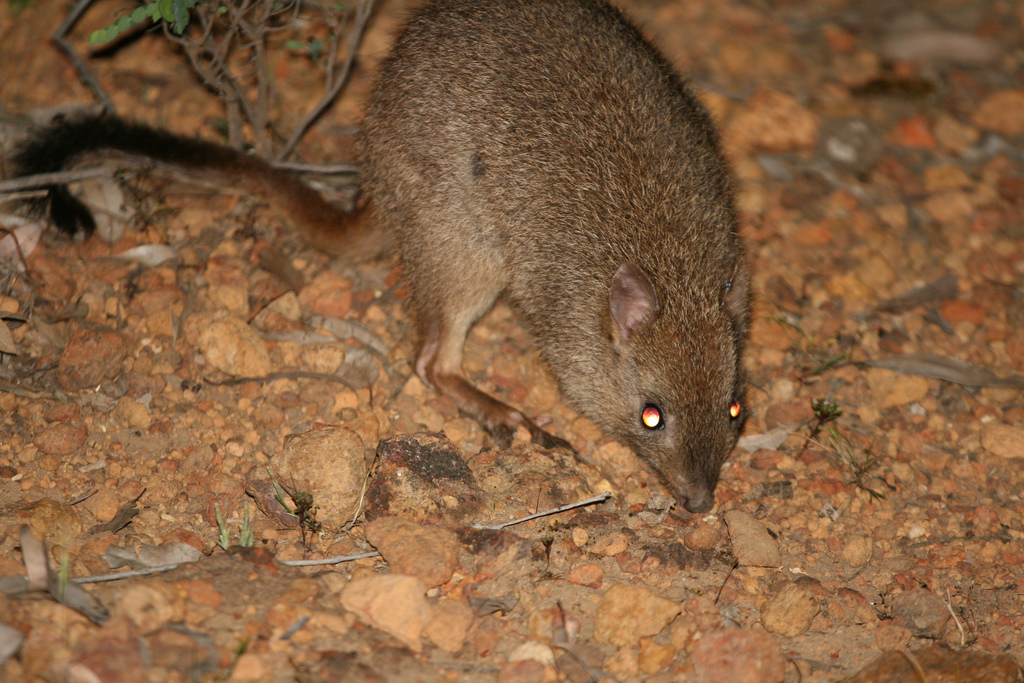
Woylie
Bettongia penicillata
Photo: Photo: Wikimedia Commons, CC BY-SA
Overview
A detailed profile for this species is sourced from the IUCN Red List of Threatened Species as assessments become available.
The Woylie faces severe population declines primarily due to predation by introduced foxes and feral cats, which have devastated populations across much of their former range. Habitat fragmentation from agricultural clearing and urban development has further reduced available territory, while disease outbreaks have caused additional mortality in remaining populations.
Habitat
Woylies inhabit open woodlands, shrublands, and heathlands with dense understory vegetation, particularly areas dominated by eucalyptus and acacia species. They prefer habitats with sandy soils suitable for digging and require areas with adequate ground cover for shelter and foraging.
Frequently asked questions
Why is Woylie classified as Critically Endangered?
Where does Woylie live?
What are the main threats to Woylie?
Get weekly conservation intelligence
One short digest a week of the most striking species and country data we ship, plus breaking conservation news paired with our database where it matters.
Free, no spam. One-click unsubscribe in every email.