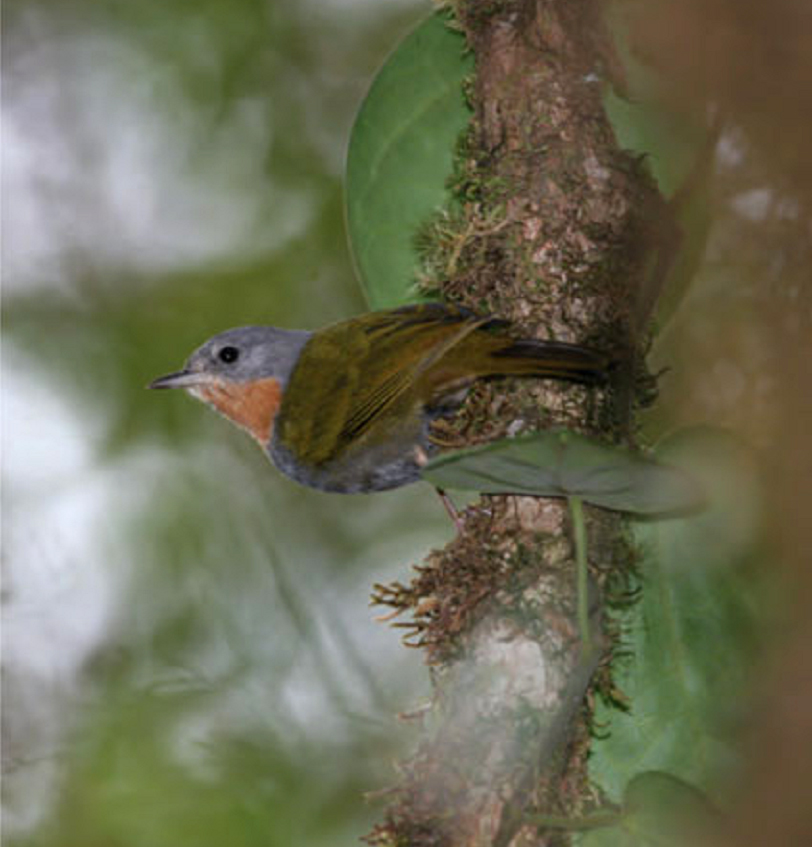
White-chested White-eye
CRCritically Endangered

White-chested White-eye

Zosterops albogularis

Conservation status data sourced from the IUCN Red List of Threatened Species.

Photo: Wikimedia Commons (CC) via https://en.wikipedia.org/wiki/White-chested_white-eye

01Classification

Taxonomy & Classification

Kingdom

Animalia

Phylum

Chordata

Class

Aves

Order

Passeriformes

Family

Zosteropidae

Genus

Zosterops

White-chested White-eye belongs to the family Zosteropidae, order Passeriformes, within the Aves class.

02Description

Species Profile

Species profile data sourced from the IUCN Red List of Threatened Species.

The White-chested White-eye faces severe threats primarily from habitat destruction and fragmentation across its limited range in Norfolk Island. Introduced species, particularly invasive plants and predators, have significantly altered the island's ecosystem and continue to impact remaining populations. The species' extremely small population size and restricted distribution make it highly vulnerable to extinction from environmental stochasticity and catastrophic events.

Key Facts

IUCN StatusCritically Endangered (CR)
GroupBirds
03Habitat

Habitat & Distribution

Endemic to Norfolk Island, this species inhabits remnant native forests dominated by Norfolk Island pine and other indigenous trees, as well as modified habitats including gardens and plantations with native vegetation components. The species occurs from sea level to the island's highest elevations, showing preference for areas with dense canopy cover and native plant species.

04Threats

Threats

!

IUCN Red List: Critically Endangered

The White-chested White-eye faces severe threats primarily from habitat destruction and fragmentation across its limited range in Norfolk Island. Introduced species, particularly invasive plants and predators, have significantly altered the island's ecosystem and continue to impact remaining populations. The species' extremely small population size and restricted distribution make it highly vulnerable to extinction from environmental stochasticity and catastrophic events.

Extremely small population size and genetic bottlenecks

HighOngoing

Habitat loss and fragmentation from land clearing

HighOngoing

Introduced predators and competitors

HighOngoing

Invasive plant species altering native vegetation structure

HighOngoing

Vulnerability to extreme weather events and natural disasters

HighOngoing
07National Status

National vs Global Threat Status

How this species is assessed at the national level compared to its IUCN global status (CR).

CountryNational StatusGlobal StatusComparison
AUEXExtinctCRCritically EndangeredHigher local risk

National Red List data sourced from the National Red List Project (nationalredlist.org, ZSL) and country-specific Red List authorities.

Community

Community Sightings

Report a sighting

No community sightings yet. Be the first to report!

07Sources

Sources & Attribution

How to Cite

IUCN: IUCN (2025). The IUCN Red List of Threatened Species. Version 2025-1. Available at: https://www.iucnredlist.org. doi:10.2305/IUCN.UK.2025-1.RLTS

GBIF: GBIF.org (2025). GBIF Home Page. Available at: https://www.gbif.org

National Red Lists: ZSL (2025). National Red List. Zoological Society of London. Available at: https://www.nationalredlist.org

This page: SpeciesRadar (2025). White-chested White-eye (Zosterops albogularis). SpeciesRadar: Intelligence for Earth's Biodiversity. Available at: https://speciesradar.org/species/white-chested-white-eye

Full citation guide & data usage terms