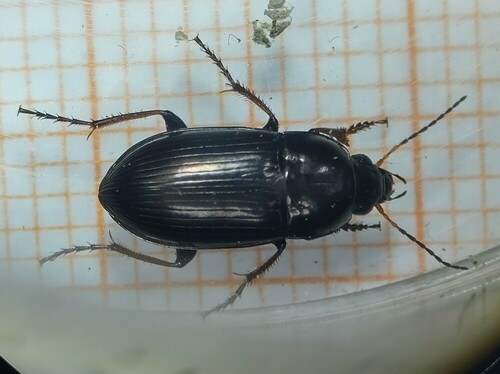
Great Trident-spurred Sunshiner
Amara strenua
Photo: Photo: (c) Ties Kemme, some rights reserved (CC BY-NC), uploaded by Ties Kemme
Overview
A detailed profile for this species is sourced from the IUCN Red List of Threatened Species as assessments become available.
Vadehavsovalløber (Amara strenua) faces severe threats from habitat loss and degradation of coastal wetland ecosystems. Climate change-induced sea level rise and increased storm intensity threaten the specialized tidal marsh habitats this species depends on, while agricultural intensification and coastal development further fragment remaining suitable areas.
Habitat
This ground beetle species inhabits salt marshes, tidal mudflats, and coastal wetlands along the Wadden Sea region. It requires specific microhabitats within these coastal ecosystems, including areas with appropriate salinity levels and vegetation structure typical of maritime grasslands and marsh edges.
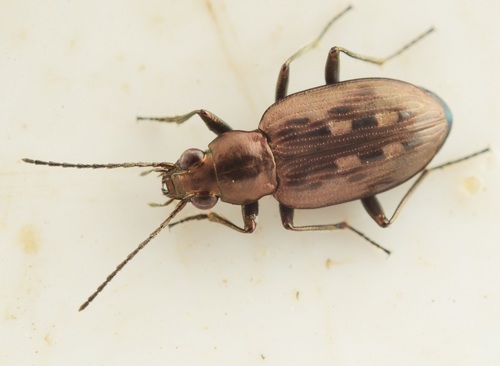
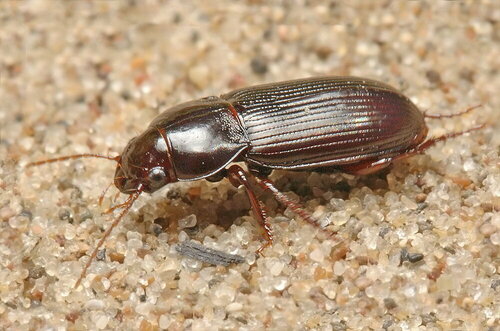
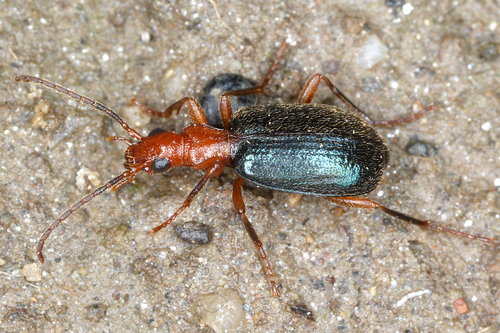
Other threatened species in Carabidae

Frequently asked questions
Why is Great Trident-spurred Sunshiner classified as Critically Endangered?
Where does Great Trident-spurred Sunshiner live?
What are the main threats to Great Trident-spurred Sunshiner?
Get weekly conservation intelligence
One short digest a week of the most striking species and country data we ship, plus breaking conservation news paired with our database where it matters.
Free, no spam. One-click unsubscribe in every email.