
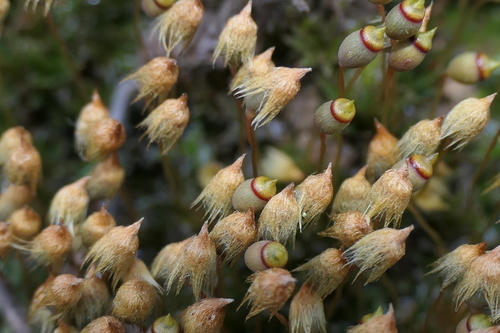
Urn Hair Moss
Pogonatum urnigerum
Photo: Wikimedia Commons (CC) via https://en.wikipedia.org/wiki/Pogonatum_urnigerum
Overview
A detailed profile for this species is sourced from the IUCN Red List of Threatened Species as assessments become available.
The Urn Haircap faces significant pressure from habitat degradation due to agricultural expansion and urban development across its range. Climate change poses an additional threat through altered precipitation patterns and temperature increases that affect the moist conditions essential for this moss species. Pollution from agricultural runoff and atmospheric deposition further compromises the water quality and soil chemistry required for healthy populations.
Habitat
The Urn Haircap typically grows in moist, acidic soils in woodland clearings, heathlands, and disturbed ground including roadsides and quarries. This moss species favors areas with consistent moisture levels and partial shade, often establishing on bare or sparsely vegetated mineral soils.
Other threatened species in Polytrichaceae


Frequently asked questions
Why is Urn Hair Moss classified as Vulnerable?
Where does Urn Hair Moss live?
What are the main threats to Urn Hair Moss?
Get weekly conservation intelligence
One short digest a week of the most striking species and country data we ship, plus breaking conservation news paired with our database where it matters.
Free, no spam. One-click unsubscribe in every email.