Tortue Frog
Eleutherodactylus warreni
Overview
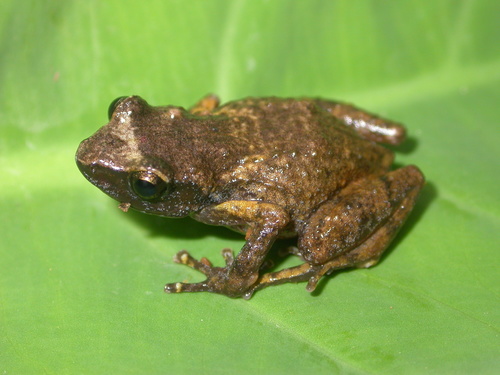
Eleutherodactylus warreni is a species of frogs in the family Eleutherodactylidae. It is endemic to the island of Tortuga off the northwestern coast of Haiti. Its natural habitat is xeric hardwood forest at an elevation of about 400 m (1,300 ft) asl. It is a terrestrial frog occurring on rocks and in leaf litter. It is threatened by habitat loss caused by logging and agriculture.
Eleutherodactylus warreni faces severe threats from habitat destruction due to agricultural expansion and urban development in its limited range in Haiti. The species' extremely restricted distribution makes it particularly vulnerable to local environmental changes and human activities. Deforestation for charcoal production and subsistence farming has fragmented its remaining forest habitat, while climate change may alter the moisture conditions essential for this direct-developing frog.
Habitat
This species inhabits montane forests and forest edges in Haiti, typically found in areas with dense vegetation and high humidity levels. It occupies leaf litter and low vegetation in primary and secondary forest habitats at moderate to high elevations.
Conservation measures underway
Other threatened species in ELEUTHERODACTYLIDAE

Threatened in Haiti
Frequently asked questions
Why is Tortue Frog classified as Critically Endangered?
Where does Tortue Frog live?
What are the main threats to Tortue Frog?
Get weekly conservation intelligence
One short digest a week of the most striking species and country data we ship, plus breaking conservation news paired with our database where it matters.
Free, no spam. One-click unsubscribe in every email.