Tiburon Burrowing Frog
Eleutherodactylus aporostegus
Overview
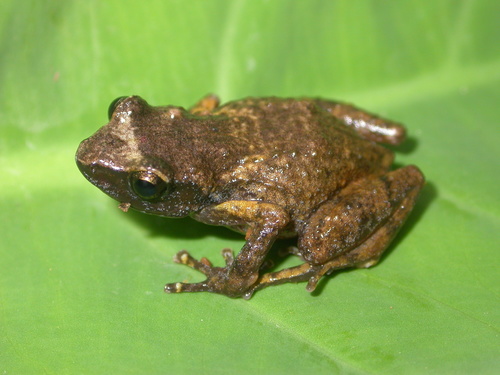
Eleutherodactylus aporostegus is a critically endangered frog species endemic to Puerto Rico, belonging to the diverse genus of direct-developing frogs known as coquís. This small terrestrial amphibian is characterized by its direct development, meaning it bypasses the typical tadpole stage and develops entirely within the egg before hatching as a miniature adult frog. The species inhabits montane forests in Puerto Rico's mountainous regions, where it occupies leaf litter and low vegetation in humid microhabitats.
Like many Caribbean endemic amphibians, E. aporostegus faces severe threats from habitat destruction due to deforestation, agricultural expansion, and urban development. Climate change poses additional challenges through altered precipitation patterns and temperature increases that affect the humid conditions essential for the species' survival.
The introduction of invasive species and potential disease outbreaks, including chytrid fungus infections that have devastated amphibian populations globally, further compound the threats to this species. Its extremely limited range makes the population particularly vulnerable to local extinctions. Conservation efforts focus on habitat protection within Puerto Rico's protected areas and forest reserves, though the species' critical status indicates that current measures may be insufficient.
Research into the species' ecology, population dynamics, and specific habitat requirements is essential for developing effective conservation strategies. The declining population trend reflects the urgent need for enhanced protection measures and habitat restoration initiatives to prevent the extinction of this endemic Puerto Rican amphibian.
Eleutherodactylus aporostegus faces severe threats from habitat destruction caused by deforestation, agricultural expansion, and urban development in Puerto Rico's mountainous regions. Climate change compounds these pressures by altering the humid conditions essential for the species' survival. The introduction of invasive species and potential disease outbreaks, including chytrid fungus, pose additional risks to this already vulnerable population.
Habitat
This species inhabits montane forests in Puerto Rico's mountainous regions, occupying humid microhabitats within leaf litter and low vegetation. The frog requires consistently moist conditions typical of tropical montane forest ecosystems.
Conservation measures underway
Other threatened species in ELEUTHERODACTYLIDAE

Threatened in Haiti
Frequently asked questions
Why is Tiburon Burrowing Frog classified as Critically Endangered?
Where does Tiburon Burrowing Frog live?
What are the main threats to Tiburon Burrowing Frog?
Get weekly conservation intelligence
One short digest a week of the most striking species and country data we ship, plus breaking conservation news paired with our database where it matters.
Free, no spam. One-click unsubscribe in every email.