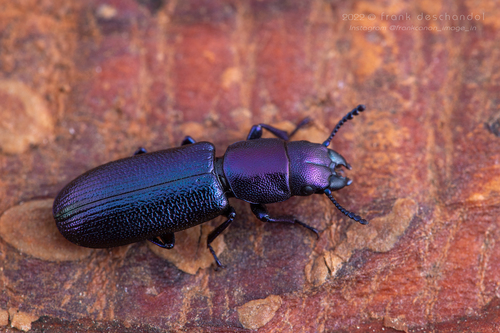
Temnochile bleu
Temnoscheila caerulea
Photo: Photo: (c) Frank Deschandol, all rights reserved, uploaded by Frank Deschandol
Overview
A detailed profile for this species is sourced from the IUCN Red List of Threatened Species as assessments become available.
Temnoscheila caerulea faces severe population declines due to widespread deforestation and habitat fragmentation across its range. The species' dependence on old-growth forest ecosystems makes it particularly vulnerable to logging activities and agricultural conversion, while climate change is altering the temperature and moisture conditions essential for both the beetle and its prey species.
Habitat
This predatory beetle inhabits mature coniferous and mixed forests, particularly those with high densities of dead and dying trees where bark beetles and wood-boring insects serve as prey. The species requires complex forest ecosystems with diverse microhabitats including fallen logs, tree bark crevices, and areas with natural disturbance patterns.
Frequently asked questions
Why is Temnochile bleu classified as Critically Endangered?
Where does Temnochile bleu live?
What are the main threats to Temnochile bleu?
Get weekly conservation intelligence
One short digest a week of the most striking species and country data we ship, plus breaking conservation news paired with our database where it matters.
Free, no spam. One-click unsubscribe in every email.