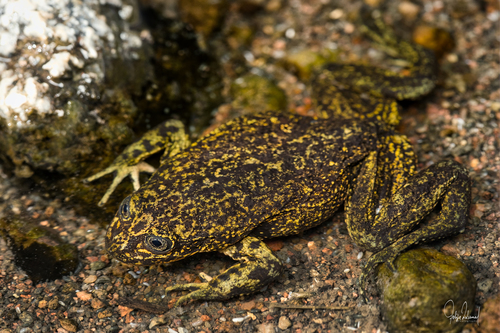
Telmatobius vilamensis
Photo: (c) Felipe Rabanal, some rights reserved (CC BY-NC), uploaded by Felipe Rabanal
Overview
Telmatobius vilamensis is a critically endangered aquatic frog endemic to the high-altitude regions of the Andes Mountains in Bolivia. This species belongs to the genus Telmatobius, commonly known as water frogs or Andean frogs, which are characterized by their adaptation to cold, oxygen-poor environments at extreme elevations. T.
vilamensis inhabits freshwater streams and springs in montane areas, where it depends on clean, well-oxygenated water for survival and reproduction. The species faces severe population declines due to multiple interconnected threats. Habitat degradation and water pollution from mining activities pose significant risks to the aquatic ecosystems this frog requires.
Climate change affects water availability and temperature regimes in high-altitude environments, potentially altering the delicate conditions necessary for the species' survival. The fungal disease chytridiomycosis, caused by Batrachochytrium dendrobatidis, has devastated amphibian populations throughout the Andes and likely impacts T. vilamensis populations.
Water extraction for human use and livestock grazing in watershed areas further compromise habitat quality. The species' restricted range and specialized habitat requirements make it particularly vulnerable to environmental changes. Conservation efforts for T.
vilamensis are limited but may include habitat protection measures and water quality monitoring in key areas. Research into the species' ecology, population status, and specific conservation needs remains essential for developing effective protection strategies for this critically endangered Andean endemic.
Telmatobius vilamensis faces threats from habitat degradation due to mining activities, water pollution, and extraction for human use. Climate change and the fungal disease chytridiomycosis further threaten remaining populations. The species' restricted high-altitude range and dependence on clean aquatic habitats make it particularly vulnerable to these environmental pressures.
Habitat
This species inhabits freshwater streams and springs in high-altitude montane regions of the Bolivian Andes. It requires clean, well-oxygenated water in cold, mountainous environments.
Other threatened species in TELMATOBIIDAE


Threatened in Chile
Frequently asked questions
Why is Telmatobius vilamensis classified as Critically Endangered?
Where does Telmatobius vilamensis live?
What are the main threats to Telmatobius vilamensis?
Get weekly conservation intelligence
One short digest a week of the most striking species and country data we ship, plus breaking conservation news paired with our database where it matters.
Free, no spam. One-click unsubscribe in every email.