Tapping Nursery-frog
Cophixalus aenigma
Overview
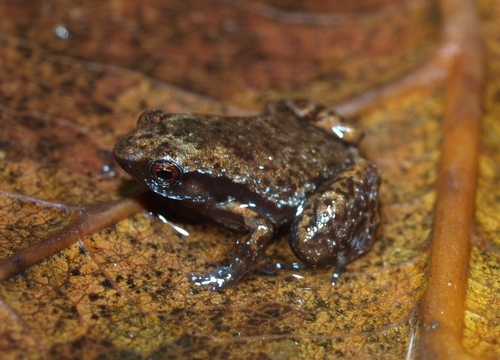
Cophixalus aenigma is a small, ground-dwelling frog belonging to the family Microhylidae, distinguished by direct development in which eggs laid on land hatch directly into fully formed froglets, bypassing an aquatic tadpole stage. Males produce distinctive tapping or clicking advertisement calls, typically from concealed positions in leaf litter or moss, which give the species its common name. As with other microhylids, it likely contributes to ecosystem function through invertebrate predation and as prey for larger forest species.
The species is restricted to upland rainforest and shrubland habitats in Australia, occurring in mountainous areas of northeastern Queensland. Its distribution is confined to specific high-elevation forest patches, making it dependent on the persistence of moist, sheltered microhabitats within these ecosystems.
The species faces several ongoing threats. Climate-driven temperature extremes pose a particular risk given its restriction to cool, high-elevation habitats with limited capacity to shift range further upslope. Invasive species and pathogens, including chytrid fungus commonly implicated in amphibian declines, threaten population health.
Habitat alteration from logging and broader shifts in forest structure reduce available breeding and shelter sites, while solid waste accumulation and pressure from problematic native species add further stress to already constrained habitat.
Conservation attention for this species is linked to broader efforts to protect Queensland's Wet Tropics bioregion, including habitat protection within reserves and ongoing monitoring of upland frog populations to track disease prevalence and climate impacts.
Currently classified as Endangered, the species has a stable population trend, suggesting that despite habitat and climate pressures, numbers have not shown recent decline. However, its narrow range and dependence on cool, high-elevation forest leave it vulnerable to future environmental change, warranting continued monitoring.
The Tapping Nursery-frog faces ongoing risks from diseases and pests—including those spread by invasive species—as well as competition or predation from native animals whose behavior has become problematic. Its rainforest habitat is being altered by logging and shifting environmental conditions, while rising temperatures and extreme heat events add further stress, and litter or waste pollution in its habitat poses an additional hazard. Because all of these threats are currently listed as ongoing rather than easing, the overall pressure on this species appears to be stable to intensifying rather than decreasing.
Habitat
Conservation measures underway
Other threatened species in MICROHYLIDAE
Threatened in Australia
Frequently asked questions
Why is Tapping Nursery-frog classified as Endangered?
Where does Tapping Nursery-frog live?
What are the main threats to Tapping Nursery-frog?
Get weekly conservation intelligence
One short digest a week of the most striking species and country data we ship, plus breaking conservation news paired with our database where it matters.
Free, no spam. One-click unsubscribe in every email.