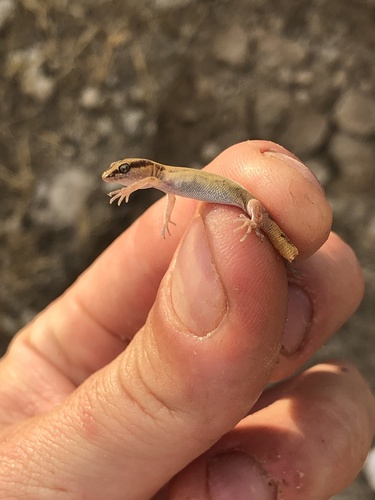
Alsophylax tadjikiensis
Photo: (c) Andrey Bragin, some rights reserved (CC BY-NC), uploaded by Andrey Bragin
Overview
The Tadjikistan even-fingered gecko is a species of gecko found in Tajikistan.
Alsophylax tadjikiensis faces severe threats from habitat destruction due to mining activities and infrastructure development in its extremely limited range in Tajikistan. The species' restriction to specific rocky outcrops and cliff faces makes it particularly vulnerable to localized disturbances. Climate change poses an additional threat by altering the microhabitat conditions essential for this gecko's survival in its high-altitude environment.
Habitat
This gecko inhabits rocky outcrops, cliff faces, and stone formations in mountainous regions of Tajikistan. It requires specific microhabitat conditions found in crevices and under rocks at moderate to high elevations.
Conservation measures underway
Other threatened species in GEKKONIDAE
Threatened in Tajikistan


Frequently asked questions
Why is Alsophylax tadjikiensis classified as Critically Endangered?
Where does Alsophylax tadjikiensis live?
What are the main threats to Alsophylax tadjikiensis?
Get weekly conservation intelligence
One short digest a week of the most striking species and country data we ship, plus breaking conservation news paired with our database where it matters.
Free, no spam. One-click unsubscribe in every email.