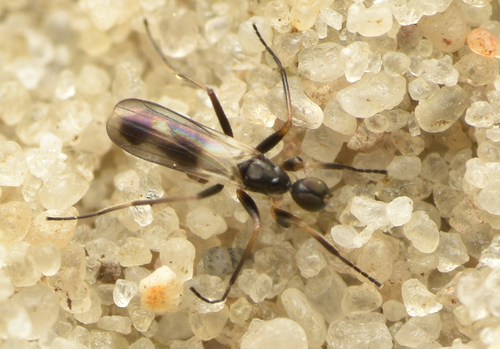
Tachydromia sabulosa
Photo: (c) Rasmus Allesoee, some rights reserved (CC BY-NC), uploaded by Rasmus Allesoee
Overview
Tachydromia sabulosa is a species of dance fly in the family Empididae, characterized by its small size and predatory behavior. These flies are part of a diverse genus of dipterans that typically inhabit sandy or coastal environments, as suggested by the species name 'sabulosa' meaning sandy. Dance flies are known for their distinctive mating behaviors and their role as predators of smaller insects.
The species has a limited known distribution and appears to be restricted to specific habitat types that may be under pressure from human activities. Like many small invertebrates, Tachydromia sabulosa faces challenges from habitat loss and degradation, particularly in coastal and sandy environments that are often subject to development pressure and recreational use. The species' critically endangered status reflects the precarious nature of its populations, though detailed population data remains limited.
Conservation efforts for this species are complicated by the general lack of comprehensive research on many dance fly species and the specialized nature of their habitat requirements. The preservation of suitable sandy habitats and the maintenance of natural ecosystem processes are likely crucial for the species' survival. Further research is needed to better understand the species' ecology, population dynamics, and specific conservation needs to develop effective protection strategies.
Tachydromia sabulosa faces primary threats from habitat loss and degradation of sandy coastal environments due to human development and recreational activities. The species' specialized habitat requirements make it particularly vulnerable to environmental changes and disturbance.
Habitat
Tachydromia sabulosa inhabits sandy environments, likely including coastal areas and sandy soils where it can find suitable prey and breeding conditions. The species appears to require specific substrate conditions that support its predatory lifestyle and reproductive needs.
Other threatened species in Hybotidae
Threatened in Belgium

Frequently asked questions
Why is Tachydromia sabulosa classified as Critically Endangered?
Where does Tachydromia sabulosa live?
What are the main threats to Tachydromia sabulosa?
Get weekly conservation intelligence
One short digest a week of the most striking species and country data we ship, plus breaking conservation news paired with our database where it matters.
Free, no spam. One-click unsubscribe in every email.