Sulu Hornbill
Anthracoceros montani
Overview
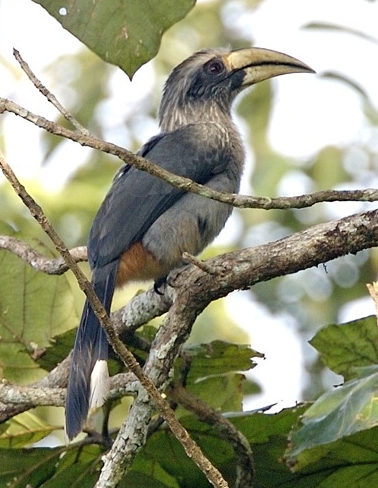
The Sulu hornbill, or Montano's hornbill, is a species of hornbill in the family Bucerotidae. It is endemic to the Sulu archipelago in the Philippines, with the remaining populations in Tawi-Tawi with it believed to be hunted to extinction on Jolo. Its natural habitat is tropical moist forests. It is threatened by habitat loss as well as potential harvesting for food. Its diet includes fruit, insects, and small lizards.
The Sulu Hornbill faces imminent extinction due to catastrophic deforestation across its restricted range in the Sulu Archipelago, Philippines. Illegal logging and agricultural conversion have eliminated over 95% of primary forest habitat, while hunting pressure for food and the pet trade has decimated the remaining population. With fewer than 800 individuals estimated to survive across just a few islands, the species lacks sufficient habitat connectivity for long-term viability.
Habitat
The Sulu Hornbill inhabits primary and secondary lowland tropical rainforests in the Sulu Archipelago, particularly favoring tall dipterocarp forests with large fruiting trees. It requires mature forest canopy for nesting in natural tree cavities and depends on diverse fruit resources found in intact forest ecosystems.
Conservation measures underway
Other threatened species in BUCEROTIDAE


Threatened in Philippines

Frequently asked questions
Why is Sulu Hornbill classified as Critically Endangered?
Where does Sulu Hornbill live?
What are the main threats to Sulu Hornbill?
Get weekly conservation intelligence
One short digest a week of the most striking species and country data we ship, plus breaking conservation news paired with our database where it matters.
Free, no spam. One-click unsubscribe in every email.