
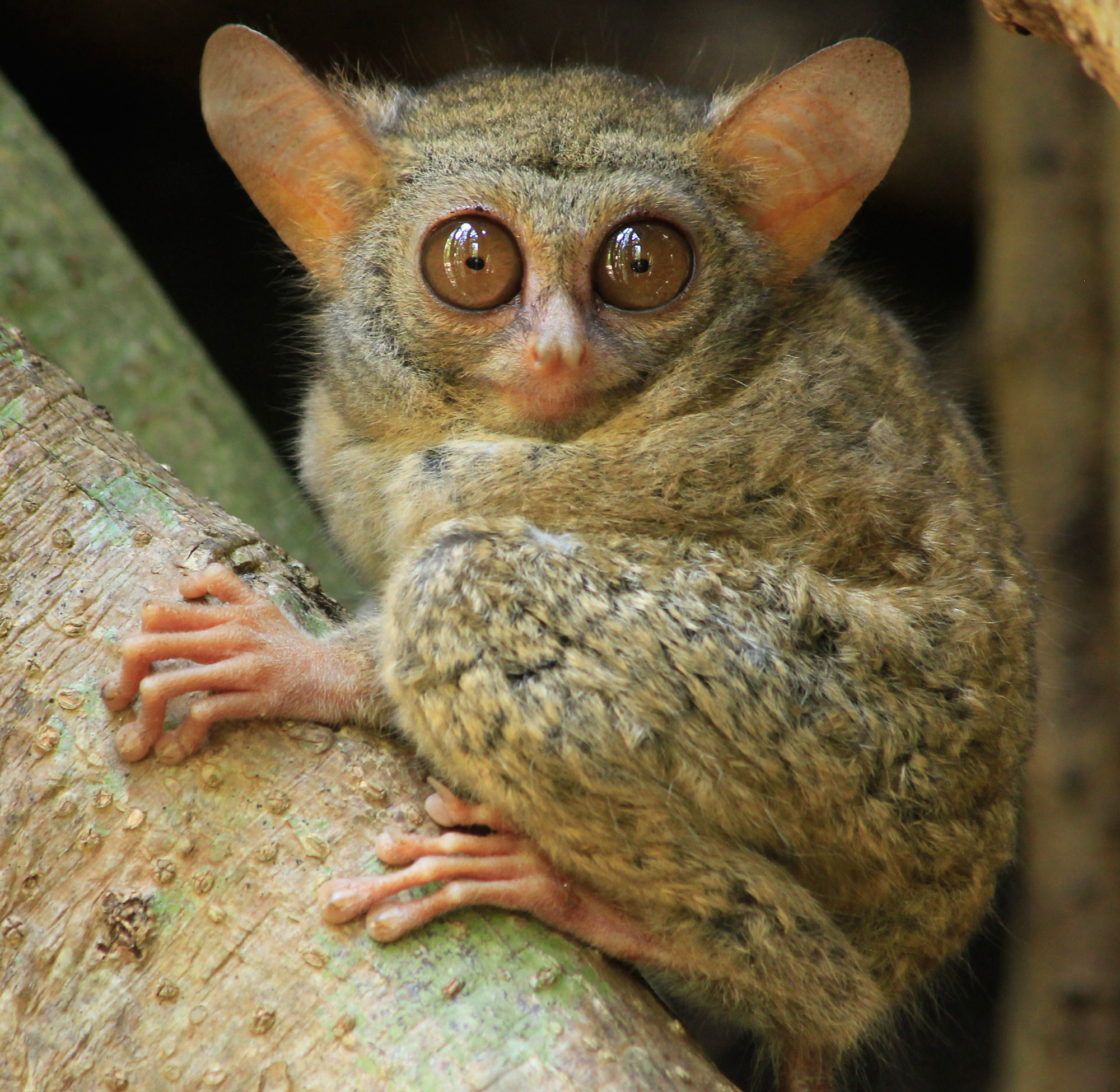
Pygmy Tarsier
Tarsius pumilus
Photo: Wikimedia Commons (CC) via https://en.wikipedia.org/wiki/Pygmy_tarsier
Overview
A detailed profile for this species is sourced from the IUCN Red List of Threatened Species as assessments become available.
Tarsius pumilus faces severe habitat loss due to deforestation and agricultural conversion throughout its limited range in Central Sulawesi. Mining activities and human settlement expansion have further fragmented the remaining forest patches where this species occurs. The species' highly specialized nocturnal lifestyle and specific habitat requirements make it particularly vulnerable to even small-scale habitat disturbances.
Habitat
Tarsius pumilus inhabits primary and secondary tropical rainforests in the mountainous regions of Central Sulawesi, typically at elevations between 1,800-2,300 meters. The species requires dense forest canopy with abundant vertical structures for sleeping sites and foraging areas.
Conservation measures underway
Other threatened species in TARSIIDAE


Threatened in Indonesia

Frequently asked questions
Why is Pygmy Tarsier classified as Endangered?
Where does Pygmy Tarsier live?
What are the main threats to Pygmy Tarsier?
Get weekly conservation intelligence
One short digest a week of the most striking species and country data we ship, plus breaking conservation news paired with our database where it matters.
Free, no spam. One-click unsubscribe in every email.