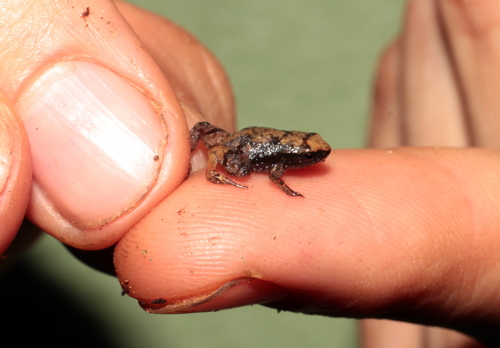
Stumpffia obscoena
Photo: (c) Lennart Hudel, some rights reserved (CC BY), uploaded by Lennart Hudel
Overview
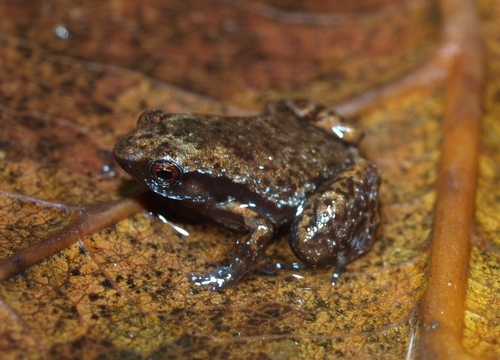
Stumpffia obscoena is a critically endangered microhylid frog endemic to Madagascar. This small terrestrial species belongs to a genus of miniature frogs that are among the smallest vertebrates in the world. The species was described relatively recently as part of ongoing taxonomic work on Madagascar's highly diverse but poorly known microhylid fauna.
Like other members of its genus, S. obscoena is characterized by its diminutive size, cryptic coloration, and specialized ecology adapted to life in leaf litter and forest floor environments. The species has an extremely limited known distribution, which contributes significantly to its conservation concern.
Madagascar's unique herpetofauna faces severe pressure from widespread habitat destruction, primarily driven by slash-and-burn agriculture, logging, and human settlement expansion. The island has lost approximately 80% of its original forest cover, with remaining fragments under continued pressure. Climate change poses additional threats through altered precipitation patterns and temperature regimes that may affect the species' microhabitat requirements.
The small body size and specialized habitat needs of S. obscoena make it particularly vulnerable to environmental changes. Conservation efforts for this species are limited by insufficient knowledge of its ecology, population size, and precise distribution.
Broader conservation initiatives focused on protecting Madagascar's remaining forest fragments may benefit the species, but targeted research and monitoring programs are needed to develop effective species-specific conservation strategies.
Stumpffia obscoena faces severe threats from habitat destruction caused by deforestation, agricultural expansion, and human settlement development across Madagascar. The species' extremely limited distribution and specialized habitat requirements make it particularly vulnerable to these ongoing pressures. Climate change may further threaten the species by altering the microhabitat conditions it requires for survival.
Habitat
Stumpffia obscoena inhabits forest floor environments in Madagascar's remaining forest fragments, where it lives among leaf litter and other ground-level microhabitats. The species requires the specific microclimate conditions found in intact forest ecosystems, including appropriate moisture levels and temperature regimes.
Conservation measures underway
Other threatened species in MICROHYLIDAE
Frequently asked questions
Why is Stumpffia obscoena classified as Critically Endangered?
Where does Stumpffia obscoena live?
What are the main threats to Stumpffia obscoena?
Get weekly conservation intelligence
One short digest a week of the most striking species and country data we ship, plus breaking conservation news paired with our database where it matters.
Free, no spam. One-click unsubscribe in every email.