Stumpffia makira
Overview
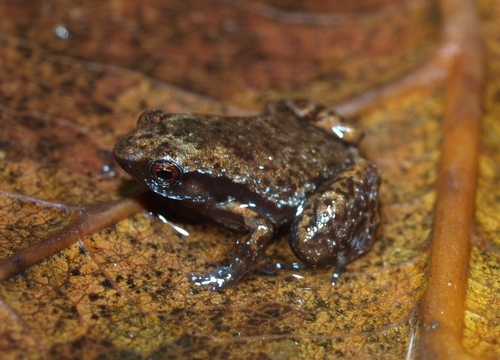
Stumpffia makira is a diminutive frog species endemic to the Solomon Islands, specifically known from Makira Island (formerly San Cristobal Island). This microhylid frog belongs to a genus characterized by exceptionally small body sizes, typically measuring less than 15 millimeters in length when fully grown. The species exhibits the cryptic coloration typical of leaf-litter dwelling frogs, with mottled brown and tan patterns that provide excellent camouflage against the forest floor.
Stumpffia makira inhabits the humid lowland and montane rainforests of Makira Island, where it occupies the leaf litter layer and low vegetation in primary forest environments. The species is presumed to have direct development, bypassing the tadpole stage common to many frogs, with eggs likely laid in moist terrestrial locations and hatching directly into miniature versions of adults. This reproductive strategy is typical of microhylid frogs in tropical environments and represents an adaptation to forest floor living.
The International Union for Conservation of Nature classifies Stumpffia makira as Critically Endangered, reflecting the severe threats facing this endemic species. The frog's extremely limited range makes it particularly vulnerable to environmental changes and habitat disturbance. However, portions of Makira Island remain under traditional community management systems that have historically protected forest areas, and there is growing recognition among local communities of the island's unique biodiversity.
Recent biological surveys have renewed scientific interest in the Solomon Islands' endemic fauna, potentially leading to improved conservation strategies for species like Stumpffia makira. The discovery and description of new microhylid species in the region suggests that dedicated conservation efforts could help protect remaining populations of this remarkable tiny frog.
Stumpffia makira faces severe pressure from logging operations that have significantly reduced Makira Island's primary forest cover, directly destroying the leaf-litter microhabitats essential for this ground-dwelling species. Agricultural expansion, particularly for subsistence farming and small-scale plantations, continues to fragment the remaining forest patches where the species occurs. The frog's extremely restricted range on a single island makes any habitat loss disproportionately devastating, as there are no alternative populations to ensure species survival. Climate change poses an additional threat through altered rainfall patterns that could disrupt the humid forest floor conditions required for the species' direct-developing reproductive cycle.
Habitat
Stumpffia makira inhabits the leaf litter and low understory vegetation of humid tropical rainforests on Makira Island in the Solomon Islands. The species requires the consistently moist microclimate found in primary forest environments, particularly areas with dense canopy cover that maintains stable humidity levels essential for its terrestrial lifestyle and direct development reproductive strategy.
Conservation measures underway
Other threatened species in MICROHYLIDAE
Frequently asked questions
Why is Stumpffia makira classified as Critically Endangered?
Where does Stumpffia makira live?
What are the main threats to Stumpffia makira?
Get weekly conservation intelligence
One short digest a week of the most striking species and country data we ship, plus breaking conservation news paired with our database where it matters.
Free, no spam. One-click unsubscribe in every email.