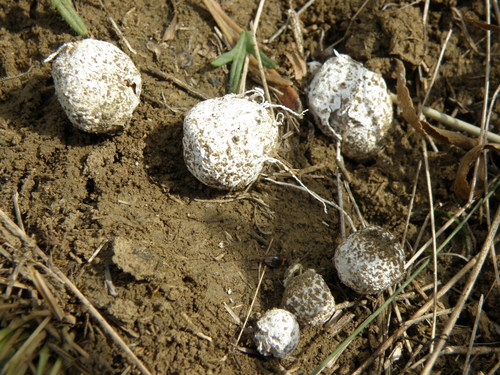
Steppe Truffle
Gastrosporium simplex
Photo: Photo: (c) yury_rebriev, niektoré práva vyhradené (CC BY-NC)
Overview
The Steppe Truffle (Gastrosporium simplex) is a subterranean fungus that forms symbiotic relationships with the roots of steppe grasses and shrubs across limited areas of temperate grasslands. This hypogeous species produces small, irregularly shaped fruiting bodies that remain underground throughout their lifecycle, making detection and study challenging. The fungus plays an important ecological role in nutrient cycling and soil health within steppe ecosystems, forming mycorrhizal associations that help plants access water and minerals.
Steppe Truffles are currently classified as Critically Endangered, though their population trend remains unknown due to the difficulty of monitoring subterranean fungi. The species faces significant threats from habitat conversion of native steppes to agricultural land, which destroys the specific soil conditions and plant communities required for the fungus to survive. Overgrazing by livestock further degrades remaining steppe habitats by compacting soils and altering plant composition.
Climate change poses additional risks through shifting precipitation patterns and temperature extremes that may disrupt the delicate balance between the fungus and its host plants. Conservation efforts for this species are limited, primarily focusing on protecting remaining intact steppe habitats through designation of protected areas. Research initiatives aim to better understand the species' distribution, ecological requirements, and population status to inform targeted conservation strategies.
Restoration of degraded steppe ecosystems may also benefit this species, though the complex soil fungal communities take decades to fully recover.
The Steppe Truffle faces severe threats from conversion of native grasslands to agriculture, which eliminates the specific soil conditions and plant partnerships it requires. Overgrazing by livestock compounds these impacts by compacting soils and disrupting the plant communities that support the fungus. Climate change further threatens the species through altered precipitation and temperature patterns that may disrupt its symbiotic relationships.
Habitat
Steppe Truffles inhabit the underground soil environment of temperate grasslands and steppes, where they form mycorrhizal associations with native grasses and shrubs. The species requires well-drained soils with specific chemical and biological properties that support both the fungus and its plant partners.
Frequently asked questions
Why is Steppe Truffle classified as Critically Endangered?
Where does Steppe Truffle live?
What are the main threats to Steppe Truffle?
Get weekly conservation intelligence
One short digest a week of the most striking species and country data we ship, plus breaking conservation news paired with our database where it matters.
Free, no spam. One-click unsubscribe in every email.