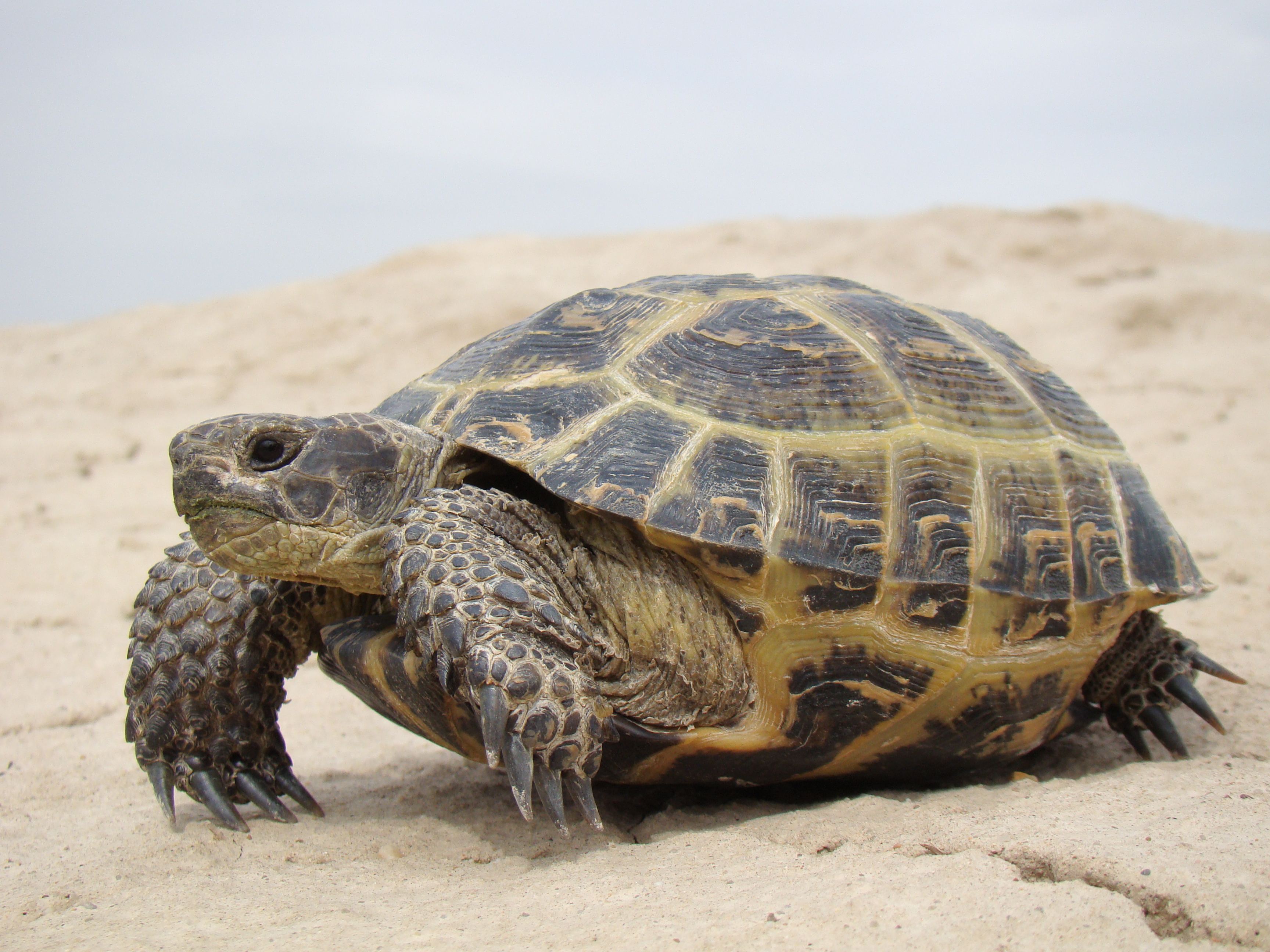
Testudo horsfieldii
Photo: Wikimedia Commons (CC) via https://en.wikipedia.org/wiki/Central_Asian_tortoise
Overview
A detailed profile for this species is sourced from the IUCN Red List of Threatened Species as assessments become available.
Horsfield's tortoise faces severe population declines primarily due to extensive collection for the international pet trade, with thousands harvested annually from wild populations across Central Asia. Habitat degradation from agricultural expansion and overgrazing by livestock has fragmented remaining suitable steppe and semi-desert environments. Climate change poses additional pressure through altered precipitation patterns affecting the sparse vegetation these tortoises depend on for food and shelter.
Habitat
Horsfield's tortoise inhabits arid steppes, semi-deserts, and scrublands across Central Asia, preferring areas with sandy or clay soils suitable for burrowing. The species occupies elevations from sea level to 2,000 meters, favoring regions with sparse vegetation including grasses, herbs, and low shrubs.
Conservation measures underway
Other threatened species in TESTUDINIDAE


Frequently asked questions
Why is Testudo horsfieldii classified as Vulnerable?
Where does Testudo horsfieldii live?
What are the main threats to Testudo horsfieldii?
Get weekly conservation intelligence
One short digest a week of the most striking species and country data we ship, plus breaking conservation news paired with our database where it matters.
Free, no spam. One-click unsubscribe in every email.