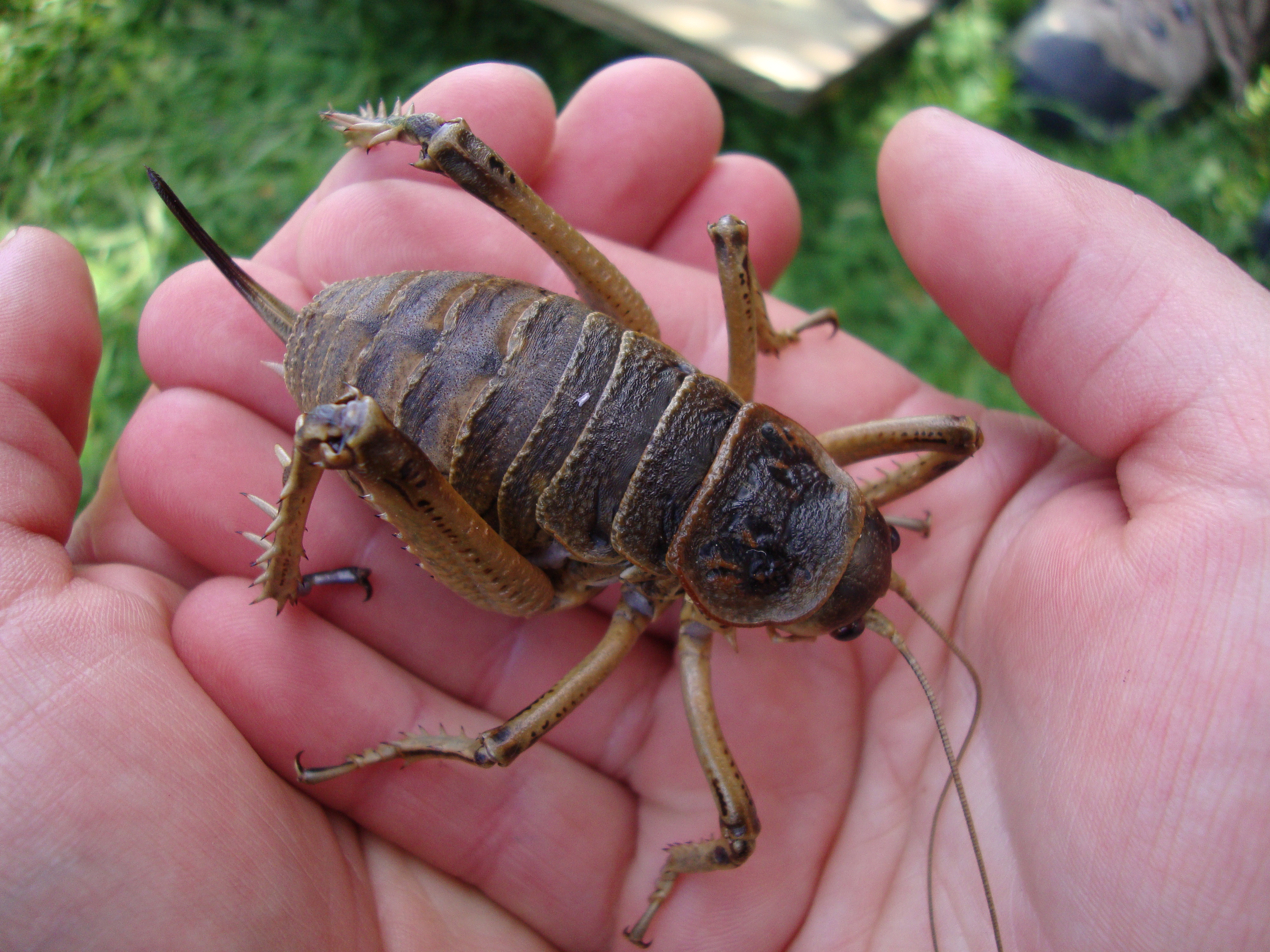
Stenopelmatus cahuilaensis
Overview
A detailed profile for this species is sourced from the IUCN Red List of Threatened Species as assessments become available.
Stenopelmatus cahuilaensis faces significant pressure from urban development and agricultural expansion throughout its limited range in southern California. The species' specialized habitat requirements make it particularly vulnerable to ground disturbance and soil compaction from construction activities. Climate change poses an additional threat through altered precipitation patterns that could affect soil moisture levels critical for this fossorial cricket's survival.
Habitat
This Jerusalem cricket inhabits sandy and loamy soils in desert scrubland and chaparral environments of southern California's Coachella Valley region. The species requires loose, well-drained soils that allow for extensive burrowing and are typically found in areas with sparse vegetation cover.
Other threatened species in STENOPELMATIDAE

Frequently asked questions
Why is Stenopelmatus cahuilaensis classified as Vulnerable?
Where does Stenopelmatus cahuilaensis live?
What are the main threats to Stenopelmatus cahuilaensis?
Get weekly conservation intelligence
One short digest a week of the most striking species and country data we ship, plus breaking conservation news paired with our database where it matters.
Free, no spam. One-click unsubscribe in every email.