Steelhead
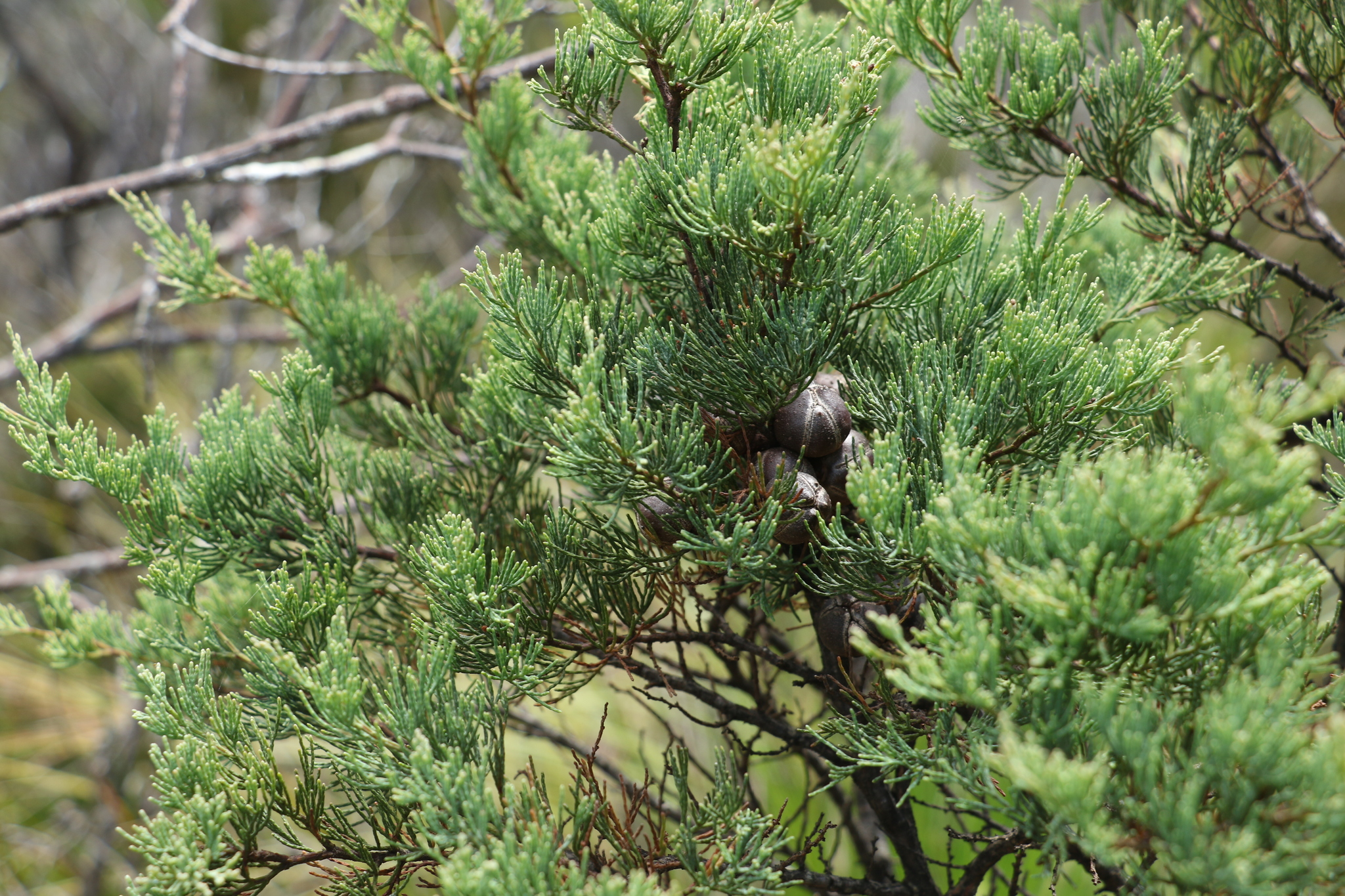
Callitris monticola
Photo: Wikimedia Commons (CC) via https://en.wikipedia.org/wiki/Callitris_monticola
Overview
This conifer belongs to the genus Callitris, a group of cone-bearing trees within the cypress family, Cupressaceae, characterized by scale-like foliage, small woody cones, and a slow-growing, long-lived habit. Like related Callitris species, it likely produces resinous, durable timber and provides habitat structure and seed resources for birds and small mammals within its native woodland environment. As a conifer, its ecological role includes contributing to canopy stability and soil retention in the ecosystems it occupies.
The species is restricted to Australia, where it occupies specific woodland or forest habitats, though detailed habitat assessments have not yet been completed. Its distribution appears limited, consistent with its classification as Vulnerable.
Population numbers are not available, but the species is experiencing an ongoing decreasing trend. Several pressures are contributing to this decline. Livestock grazing and ranching activity degrade understory conditions and may suppress seedling establishment, limiting natural regeneration.
Altered fire regimes—both increased fire frequency and fire suppression—disrupt the natural cycles many Callitris species depend on for germination and stand renewal, while also posing direct mortality risk to mature individuals. Additionally, invasive non-native species, whether through competition, habitat alteration, or disease introduction, add further strain to already vulnerable populations.
Specific conservation programs targeting this species are not well documented, though it likely benefits indirectly from broader Australian land management strategies, including fire regime management, grazing control in protected areas, and invasive species control programs implemented across native woodland ecosystems.
Given the ongoing and compounding nature of these threats—habitat pressure from grazing, fire regime disruption, and invasive species—the species' population trajectory remains concerning. Without targeted intervention addressing these specific pressures, continued decline is the likely outlook, reinforcing the importance of habitat-specific conservation planning.
Callitris monticola faces ongoing pressure from livestock grazing and ranching, which can damage young plants and disturb their habitat, along with fire and fire suppression practices that can alter the natural conditions this species needs to survive. It is also threatened by invasive non-native species, which may compete with it or otherwise disrupt its environment. Based on the available information, these threats appear to be ongoing and stable rather than clearly intensifying or decreasing.
Other threatened species in CUPRESSACEAE
Threatened in Australia
Frequently asked questions
Why is Steelhead classified as Vulnerable?
Where does Steelhead live?
What are the main threats to Steelhead?
Get weekly conservation intelligence
One short digest a week of the most striking species and country data we ship, plus breaking conservation news paired with our database where it matters.
Free, no spam. One-click unsubscribe in every email.