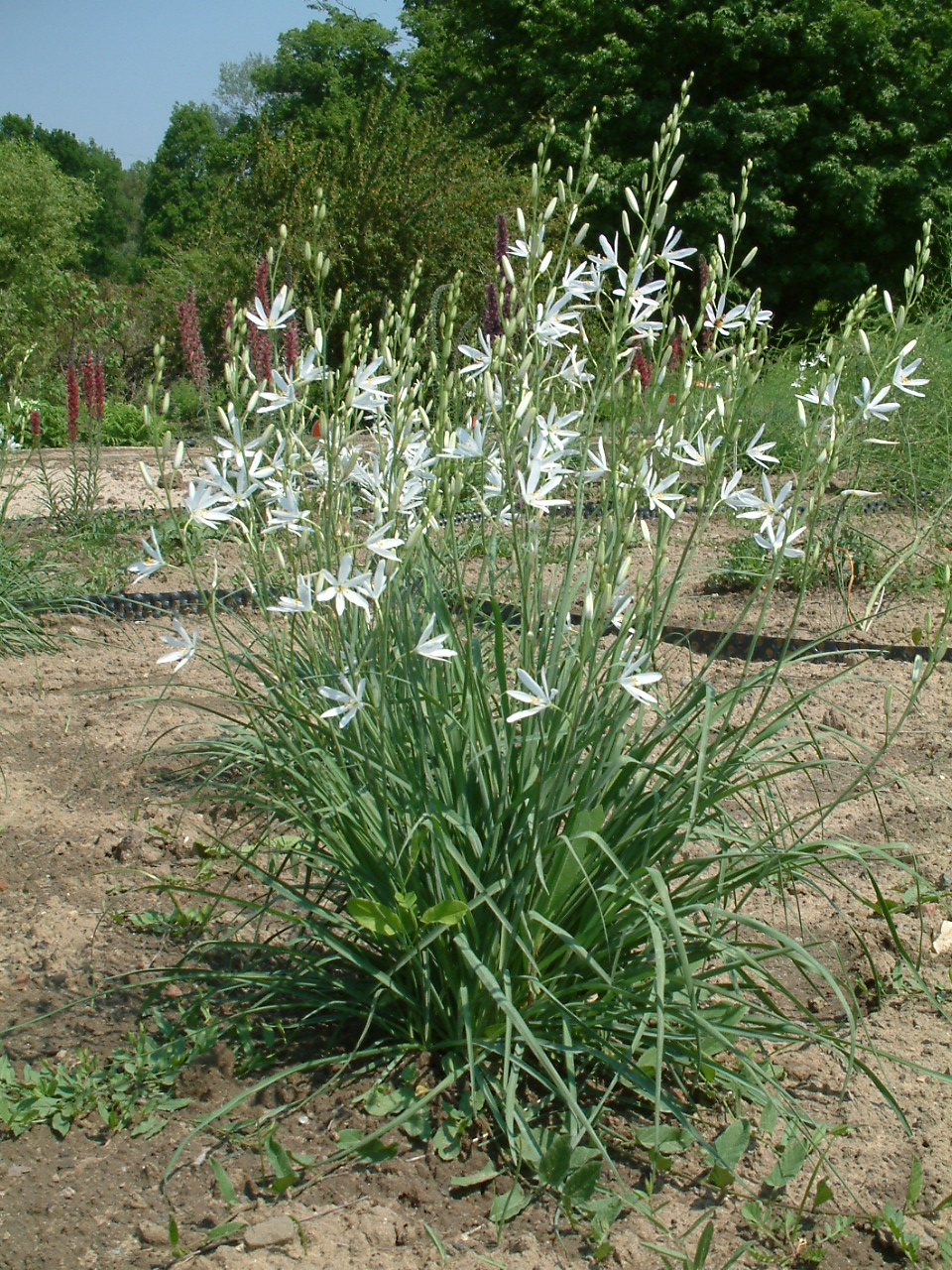
St Bernard's Lily
Anthericum liliago
Photo: Wikimedia Commons (CC) via https://en.wikipedia.org/wiki/Anthericum_liliago
Overview
A detailed profile for this species is sourced from the IUCN Red List of Threatened Species as assessments become available.
St Bernard's Lily faces severe population declines across its European range due to agricultural intensification and abandonment of traditional grazing practices that maintained its preferred grassland habitats. Urban development and infrastructure expansion have fragmented remaining populations, while changes in land management have allowed scrubland encroachment to shade out this light-demanding species. Climate change compounds these pressures by altering precipitation patterns and increasing drought stress in its already restricted mountain grassland habitats.
Habitat
St Bernard's Lily inhabits dry, calcareous grasslands, rocky slopes, and open woodlands across mountainous regions of central and southern Europe. It thrives in well-drained, nutrient-poor soils with high calcium content, typically found at elevations between 300-2000 meters in areas with traditional extensive grazing management.
Other threatened species in Asparagaceae
Frequently asked questions
Why is St Bernard's Lily classified as Endangered?
Where does St Bernard's Lily live?
What are the main threats to St Bernard's Lily?
Get weekly conservation intelligence
One short digest a week of the most striking species and country data we ship, plus breaking conservation news paired with our database where it matters.
Free, no spam. One-click unsubscribe in every email.