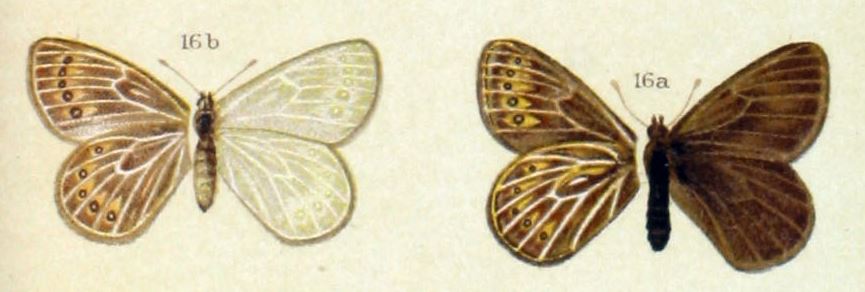
Spotted Fritillary
Melitaea didyma
Conservation status data sourced from the IUCN Red List of Threatened Species.
Photo: Wikimedia Commons (CC) via https://en.wikipedia.org/wiki/Melitaea_didyma
Taxonomy & Classification
Kingdom
Animalia
Phylum
Arthropoda
Class
Insecta
Order
Lepidoptera
Family
Nymphalidae
Genus
Melitaea
Spotted Fritillary belongs to the family Nymphalidae, order Lepidoptera, within the Insecta class.
Species Profile
Species profile data sourced from the IUCN Red List of Threatened Species.
The Spotted Fritillary faces severe population declines across its range due to widespread habitat loss and degradation of traditional grassland ecosystems. Agricultural intensification, urbanization, and changes in land management practices have eliminated much of the species' preferred habitat, while climate change is altering the distribution and phenology of both the butterfly and its host plants.
Key Facts
Habitat & Distribution
Dry grasslands, meadows, scrubland, and open woodland clearings, typically on calcareous soils and sunny slopes up to 2000m elevation. The species requires areas with abundant host plants from the Plantaginaceae and Scrophulariaceae families, particularly in traditionally managed pastoral landscapes.
Threats
IUCN Red List: Critically Endangered
The Spotted Fritillary faces severe population declines across its range due to widespread habitat loss and degradation of traditional grassland ecosystems. Agricultural intensification, urbanization, and changes in land management practices have eliminated much of the species' preferred habitat, while climate change is altering the distribution and phenology of both the butterfly and its host plants.
Abandonment of traditional extensive grazing practices
Climate change affecting host plant availability
Habitat loss and fragmentation from agricultural intensification
Pesticide use in agricultural landscapes
Urban development and infrastructure expansion
National vs Global Threat Status
How this species is assessed at the national level compared to its IUCN global status (CR).
| Country | National Status | Global Status | Comparison |
|---|---|---|---|
| EU | LCLeast Concern | CRCritically Endangered | Lower local risk |
| EU | LCLeast Concern | CRCritically Endangered | Lower local risk |
National Red List data sourced from the National Red List Project (nationalredlist.org, ZSL) and country-specific Red List authorities.
Community Sightings
Report a sightingNo community sightings yet. Be the first to report!
Sources & Attribution
How to Cite
IUCN: IUCN (2025). The IUCN Red List of Threatened Species. Version 2025-1. Available at: https://www.iucnredlist.org. doi:10.2305/IUCN.UK.2025-1.RLTS
GBIF: GBIF.org (2025). GBIF Home Page. Available at: https://www.gbif.org
National Red Lists: ZSL (2025). National Red List. Zoological Society of London. Available at: https://www.nationalredlist.org
This page: SpeciesRadar (2025). Spotted Fritillary (Melitaea didyma). SpeciesRadar: Intelligence for Earth's Biodiversity. Available at: https://speciesradar.org/species/spotted-fritillary