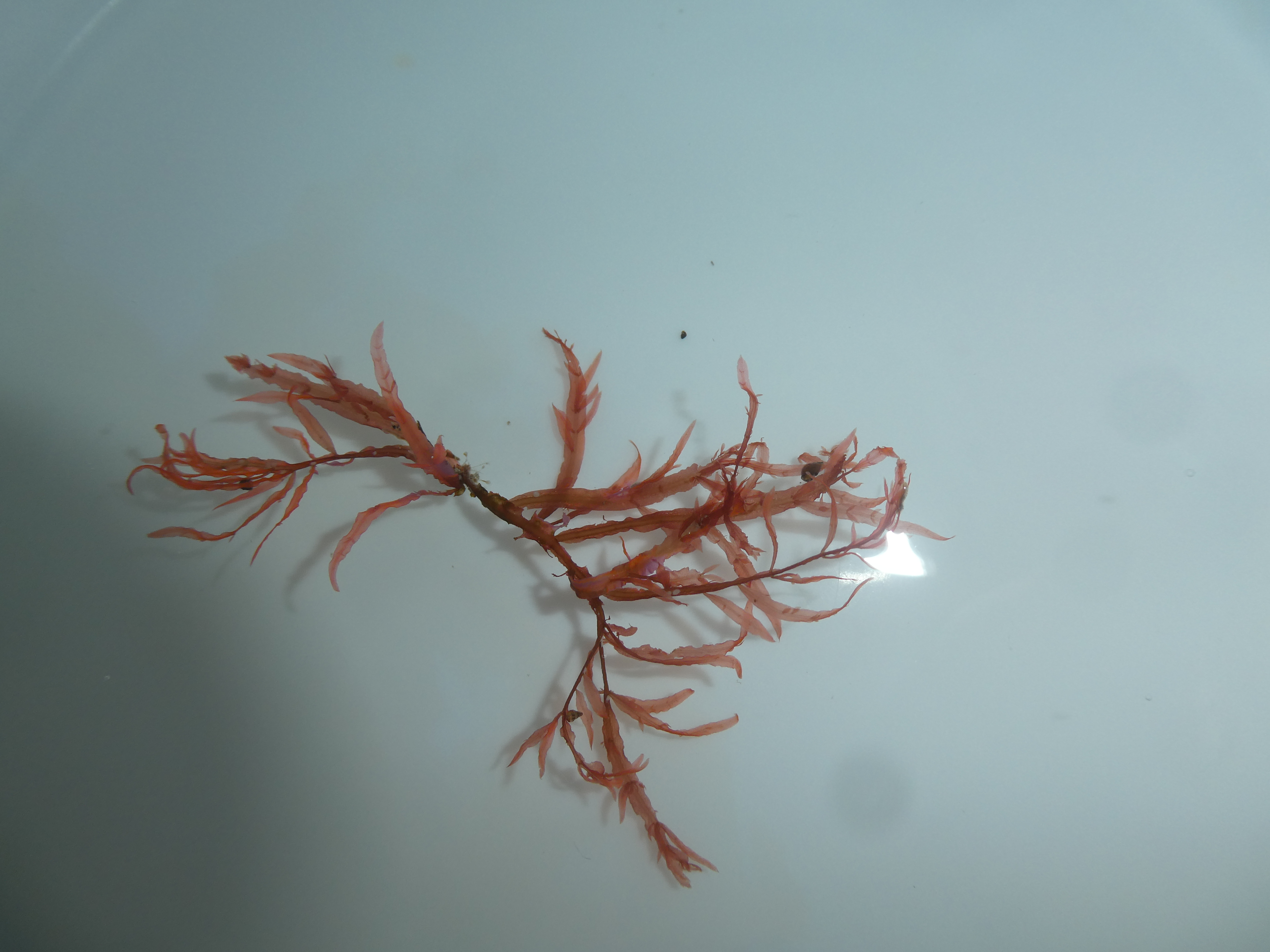
spetsnervblad
Hypoglossum hypoglossoides
Photo: Wikimedia Commons (CC) via https://en.wikipedia.org/wiki/Hypoglossum_hypoglossoides
Overview
A detailed profile for this species is sourced from the IUCN Red List of Threatened Species as assessments become available.
Spetsnervblad faces significant pressure from coastal development and marine pollution in its shallow water habitats. Ocean acidification poses an emerging threat to this calcifying red algae, potentially weakening its cellular structure and reducing reproductive success. Increased sedimentation from terrestrial runoff and boat traffic further degrades the clear water conditions this species requires for photosynthesis.
Habitat
This delicate red algae inhabits shallow coastal waters, typically growing on rocky substrates and other hard surfaces in the subtidal zone. It requires clear, well-oxygenated waters with moderate water movement and is commonly found in depths ranging from 5 to 30 meters.
Frequently asked questions
Why is spetsnervblad classified as Vulnerable?
Where does spetsnervblad live?
What are the main threats to spetsnervblad?
Get weekly conservation intelligence
One short digest a week of the most striking species and country data we ship, plus breaking conservation news paired with our database where it matters.
Free, no spam. One-click unsubscribe in every email.