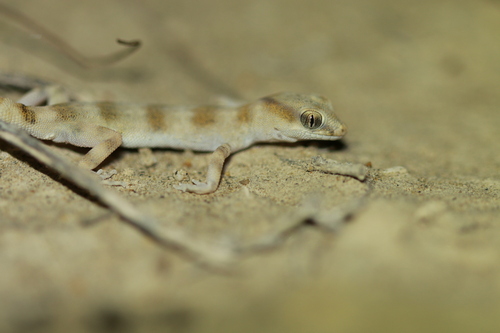
Alsophylax laevis
Photo: (c) Matouš plecitý, some rights reserved (CC BY-NC), uploaded by Matouš plecitý
Overview
The southern even-fingered gecko is a ground and tree dwelling species of gecko found in Turkmenistan, Uzbekistan, Iran, Tajikistan and Afghanistan. This species of gecko lives in the desert and shrublands. The Gecko is part of a divergence from the Squamata order around 65 million years ago, and the species is part of the family Gekkonidae.
Limited research has been done on the southern even-fingered gecko due to the fact that the species is critically endangered. The Gecko has only been captured once in recent years. In 2020 it was captured for the first time since 1963.
Conservation efforts are being put in place to mitigate the harm caused to the habitat of the gecko.
Alsophylax laevis faces severe population decline due to extensive habitat destruction from urban development and agricultural expansion across its limited range in Central Asia. Mining activities and infrastructure development have fragmented the remaining suitable rocky habitats essential for this gecko's survival. Climate change poses an additional threat by altering the arid conditions this species has adapted to over millennia.
Habitat
This gecko inhabits arid rocky outcrops, stone walls, and cliff faces in semi-desert regions of Central Asia. It requires specific microhabitat conditions with adequate rock crevices for shelter and thermoregulation in harsh continental climates.
Conservation measures underway
Other threatened species in GEKKONIDAE
Threatened in Iran

Frequently asked questions
Why is Alsophylax laevis classified as Critically Endangered?
Where does Alsophylax laevis live?
What are the main threats to Alsophylax laevis?
Get weekly conservation intelligence
One short digest a week of the most striking species and country data we ship, plus breaking conservation news paired with our database where it matters.
Free, no spam. One-click unsubscribe in every email.