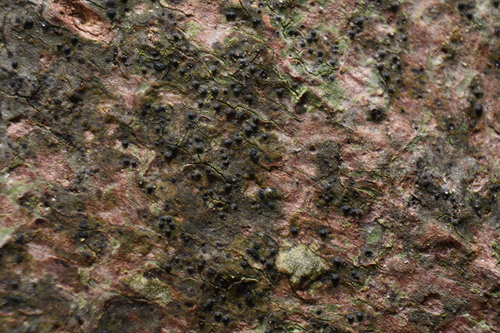
Pseudosagedia borreri
Local name: skånsk porina
Photo: Photo: (c) Paul Bowyer, niektoré práva vyhradené (CC BY-NC), uploaded by Paul Bowyer
Overview
A detailed profile for this species is sourced from the IUCN Red List of Threatened Species as assessments become available.
Skånsk porina faces severe threats from air pollution and acid rain, which degrade the specific bark chemistry required for this lichen's survival. Habitat loss through urbanization and intensive forestry practices in southern Sweden has eliminated many suitable host trees, while climate change alters the delicate moisture and temperature conditions this species requires.
Habitat
This lichen species grows on the bark of deciduous trees, particularly in old-growth and semi-natural woodlands with stable microclimatic conditions. It requires trees with specific bark chemistry and texture, typically found in undisturbed forest environments with consistent humidity levels.
Frequently asked questions
Why is skånsk porina classified as Critically Endangered?
Where does skånsk porina live?
What are the main threats to skånsk porina?
Get weekly conservation intelligence
One short digest a week of the most striking species and country data we ship, plus breaking conservation news paired with our database where it matters.
Free, no spam. One-click unsubscribe in every email.