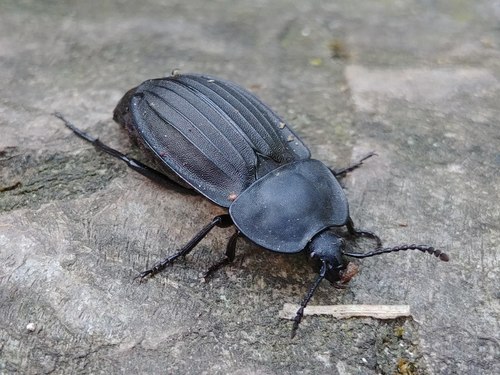
Silphid beetle
Silpha carinata
Photo: Photo: (c) Marco Munari, some rights reserved (CC BY-NC), uploaded by Marco Munari
Overview
A detailed profile for this species is sourced from the IUCN Red List of Threatened Species as assessments become available.
Silpha carinata faces severe population declines due to habitat destruction from agricultural expansion and urbanization, which eliminates the decaying organic matter and carrion essential for its survival. Climate change further threatens this species by altering the decomposition processes and seasonal patterns that govern its reproductive cycles and food availability.
Habitat
This species inhabits deciduous and mixed forests, woodland edges, and areas with abundant decaying organic matter including carrion, rotting vegetation, and decomposing animal remains. It is typically found in temperate regions with adequate moisture and shade that support the decomposition processes essential for its feeding and breeding requirements.
Other threatened species in Staphylinidae

Threatened in Åland Islands


Frequently asked questions
Why is Silphid beetle classified as Critically Endangered?
Where does Silphid beetle live?
What are the main threats to Silphid beetle?
Get weekly conservation intelligence
One short digest a week of the most striking species and country data we ship, plus breaking conservation news paired with our database where it matters.
Free, no spam. One-click unsubscribe in every email.