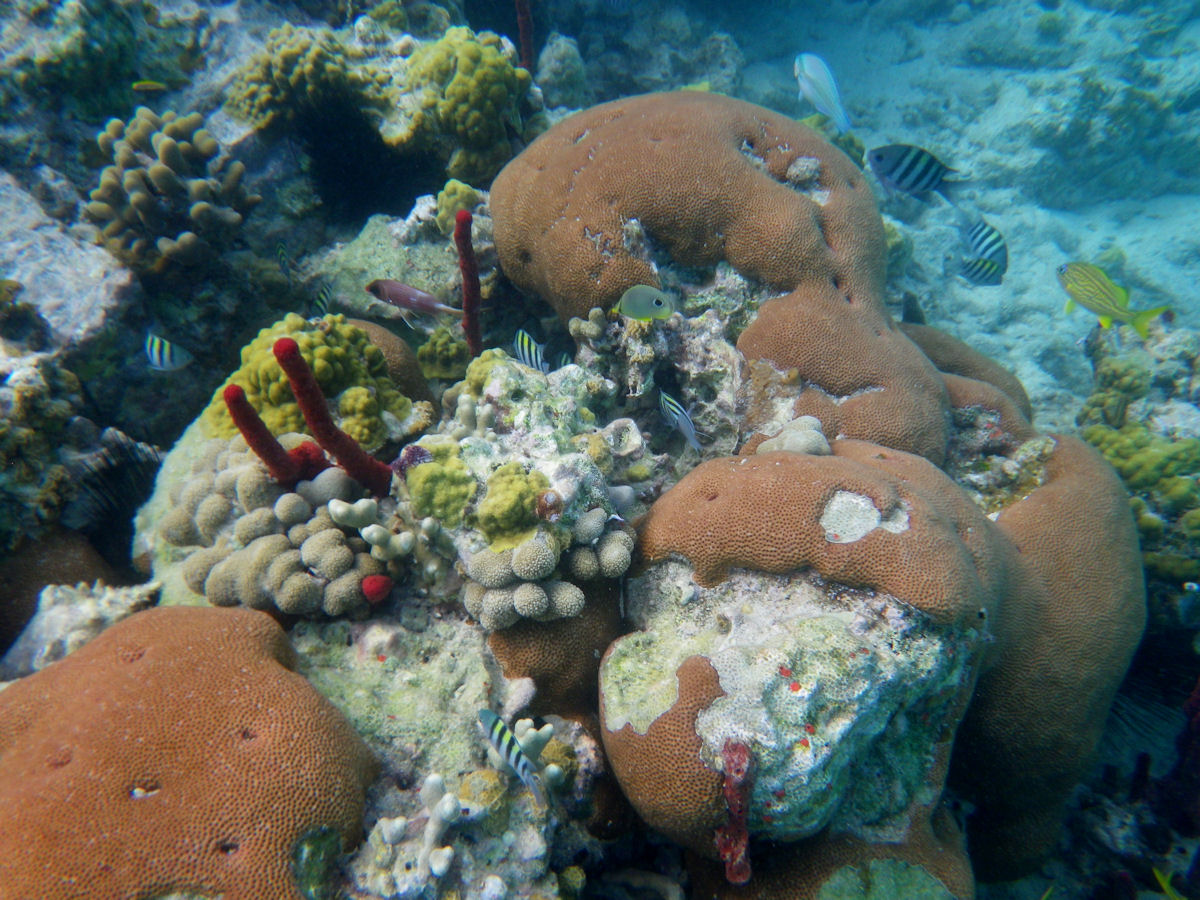
Massive Starlet Coral
Siderastrea siderea
Photo: Wikimedia Commons (CC) via https://en.wikipedia.org/wiki/Siderastrea_siderea
Overview
Siderastrea siderea, commonly known as massive starlet coral or round starlet coral, is a stony coral in the family Siderastreidae. It is found in shallow parts of the western Atlantic Ocean as solid boulder-shaped or domed structures.
Siderastrea siderea faces severe population declines primarily due to coral bleaching events triggered by rising sea temperatures, with mass mortality recorded during marine heatwaves in the Caribbean. Ocean acidification compounds these stresses by reducing the coral's ability to build and maintain its calcium carbonate skeleton. Coastal development and sedimentation from land-based activities further degrade water quality in shallow reef environments where this species typically thrives.
Habitat
Siderastrea siderea inhabits shallow coral reef environments and rocky substrates in tropical and subtropical waters of the western Atlantic, typically found at depths ranging from 1 to 40 meters. This massive coral species forms large, dome-shaped colonies on reef flats, fore-reefs, and back-reef areas where it can tolerate varying levels of wave action and sedimentation.
Conservation measures underway
Threatened in Bahamas


Frequently asked questions
Why is Massive Starlet Coral classified as Critically Endangered?
Where does Massive Starlet Coral live?
What are the main threats to Massive Starlet Coral?
Get weekly conservation intelligence
One short digest a week of the most striking species and country data we ship, plus breaking conservation news paired with our database where it matters.
Free, no spam. One-click unsubscribe in every email.