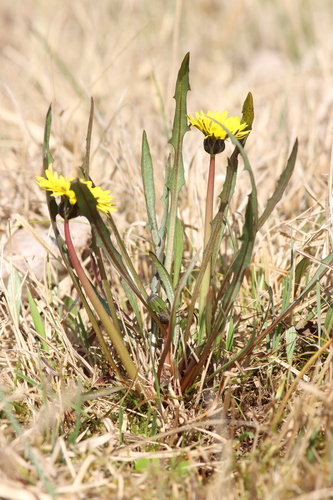
Taraxacum obtusilobum
Overview
A detailed profile for this species is sourced from the IUCN Red List of Threatened Species as assessments become available.
Taraxacum obtusilobum faces severe threats from habitat loss due to agricultural expansion and urban development in its specialized alpine and subalpine environments. Climate change poses an additional critical threat as warming temperatures force this cold-adapted species to retreat to increasingly limited high-elevation refugia. The species' restricted range and small population size make it particularly vulnerable to local extinctions from human disturbance and environmental changes.
Habitat
This species occupies alpine and subalpine meadows, rocky slopes, and grasslands typically found at elevations between 1,500-3,000 meters. It grows in well-drained soils in open areas with cold winter conditions and short growing seasons characteristic of high-elevation environments.
Other threatened species in Asteraceae

Frequently asked questions
Why is Taraxacum obtusilobum classified as Critically Endangered?
Where does Taraxacum obtusilobum live?
What are the main threats to Taraxacum obtusilobum?
Get weekly conservation intelligence
One short digest a week of the most striking species and country data we ship, plus breaking conservation news paired with our database where it matters.
Free, no spam. One-click unsubscribe in every email.