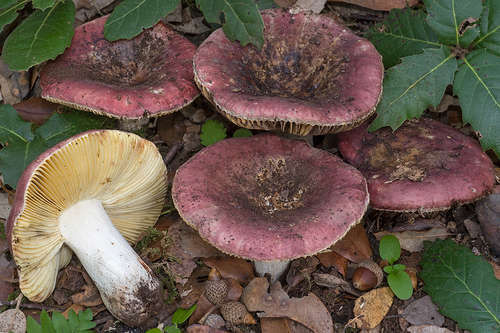
Russula romellii
Local name: Russule à lames fragiles
Overview
A detailed profile for this species is sourced from the IUCN Red List of Threatened Species as assessments become available.
Russula romellii faces severe decline due to widespread deforestation and habitat fragmentation across its European range. The species is particularly vulnerable to soil acidification from atmospheric pollution, which alters the mycorrhizal relationships essential for its survival. Climate change compounds these pressures by shifting temperature and moisture regimes beyond the species' tolerance thresholds.
Habitat
This mycorrhizal fungus forms symbiotic relationships with deciduous and mixed forest trees, particularly favoring beech and oak woodlands with well-drained, calcareous soils. It typically occurs in mature forest ecosystems with stable soil chemistry and established fungal networks.
Other threatened species in Russulaceae


Threatened in Åland Islands


Frequently asked questions
Why is Russule à lames fragiles classified as Endangered?
Where does Russule à lames fragiles live?
What are the main threats to Russule à lames fragiles?
Get weekly conservation intelligence
One short digest a week of the most striking species and country data we ship, plus breaking conservation news paired with our database where it matters.
Free, no spam. One-click unsubscribe in every email.