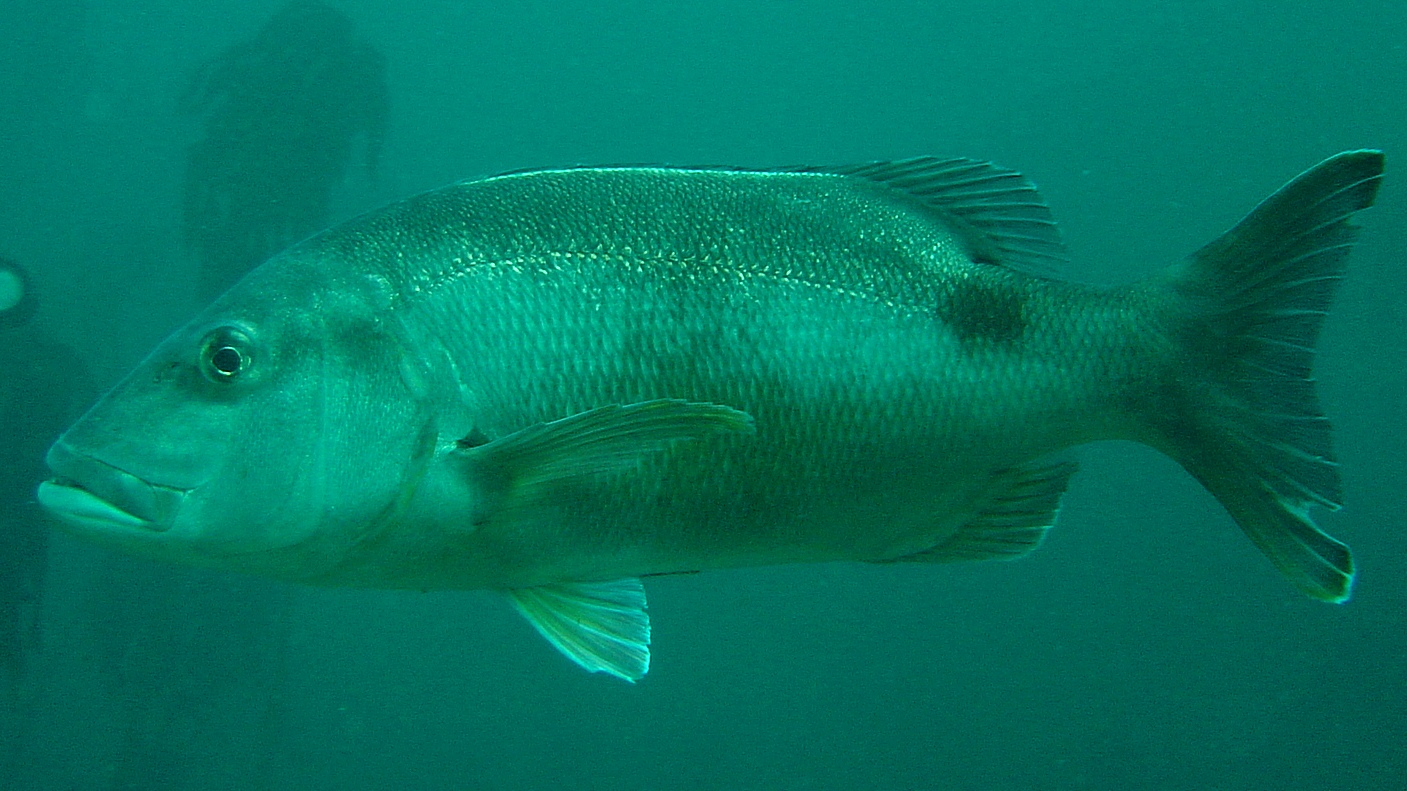
Red Steenbras
Petrus rupestris
Photo: Wikimedia Commons (CC) via https://en.wikipedia.org/wiki/Red_steenbras
Overview
The red steenbras is a species of fish in the family Sparidae and the only known member of the monospecific genus Petrus. This species is endemic to South Africa. The species' population has been depleted by overfishing in African waters and it has been classified as an endangered species by the International Union for Conservation of Nature.
Petrus rupestris faces severe threats from limestone quarrying and mining activities that directly destroy its specialized rocky habitat. The species' extremely limited range makes it particularly vulnerable to habitat fragmentation, while invasive plant species alter the microhabitat conditions essential for its survival. Climate change poses an additional threat through altered precipitation patterns that affect the moisture regimes of its rocky crevice environment.
Habitat
This species inhabits limestone rock crevices and cliff faces in mountainous regions, requiring specific moisture and temperature conditions found in these specialized rocky microhabitats. It is typically found in areas with natural limestone formations that provide the precise environmental conditions necessary for its survival.
Conservation measures underway
Other threatened species in SPARIDAE


Threatened in Gambia


Frequently asked questions
Why is Red Steenbras classified as Critically Endangered?
Where does Red Steenbras live?
What are the main threats to Red Steenbras?
Get weekly conservation intelligence
One short digest a week of the most striking species and country data we ship, plus breaking conservation news paired with our database where it matters.
Free, no spam. One-click unsubscribe in every email.