CRCritically Endangered

Eremospatha barendii

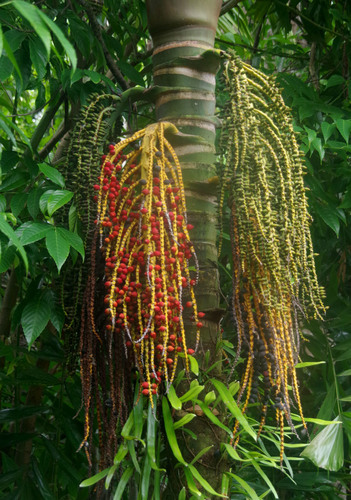
Eremospatha barendii is a climbing palm species endemic to West Africa, belonging to the rattan palm family. This critically endangered species is characterized by its slender, flexible stems that can reach considerable lengths as they climb through forest canopies using hooked spines.

1

Countries

01Classification

Taxonomy & Classification

Kingdom

PLANTAE

Phylum

TRACHEOPHYTA

Class

LILIOPSIDA

Order

ARECALES

Family

ARECACEAE

Genus

Eremospatha

Eremospatha barendii belongs to the family ARECACEAE, order ARECALES, within the LILIOPSIDA class.

02Description

Species Profile

Eremospatha barendii is a climbing palm species endemic to West Africa, belonging to the rattan palm family. This critically endangered species is characterized by its slender, flexible stems that can reach considerable lengths as they climb through forest canopies using hooked spines. The palm produces small fruits and has pinnate leaves typical of the Eremospatha genus. E. barendii is found in tropical rainforest environments where it plays an ecological role as both habitat and food source for various wildlife species. The species faces severe threats primarily from deforestation and habitat conversion for agricultural purposes, logging operations, and human settlement expansion. Its restricted range makes it particularly vulnerable to localized disturbances and environmental changes. The palm's slow growth rate and specific habitat requirements further compound its conservation challenges, as degraded areas may take decades to recover suitable conditions for reestablishment. Traditional uses of rattan palms for basketry, furniture, and construction materials may also contribute to collection pressure on wild populations. Currently, there is limited information available about specific conservation programs targeting this species, though broader forest conservation initiatives in West Africa may provide some indirect protection. The unknown population trend reflects the need for comprehensive field surveys to assess current population status and distribution. Research into the species' ecology, reproductive biology, and habitat requirements would be valuable for developing targeted conservation strategies.

Eremospatha barendii faces severe threats from deforestation and habitat conversion driven by agricultural expansion, logging, and human settlement development. The species' restricted range makes it particularly vulnerable to localized habitat destruction and environmental disturbances.

Key Facts

IUCN StatusCritically Endangered (CR)
GroupPlants
03Habitat

Habitat & Distribution

This species inhabits tropical rainforest environments in West Africa, where it climbs through forest canopies using its flexible stems and hooked spines. It requires intact forest conditions with appropriate canopy structure for its climbing growth habit.

ForestMajorWetlands (inland) - Permanent rivers/streamsMajor
04Threats

Threats

!

IUCN Red List: Critically Endangered

Eremospatha barendii faces severe threats from deforestation and habitat conversion driven by agricultural expansion, logging, and human settlement development. The species' restricted range makes it particularly vulnerable to localized habitat destruction and environmental disturbances.

Annual & perennial non-timber crops

Ongoing

Logging & wood harvesting

Ongoing
05Conservation

Conservation Actions

Species recovery
Ex-situ conservation
06Range

Found in 1 Country

Community

Community Sightings

Report a sighting

No community sightings yet. Be the first to report!

07Sources

Sources & Attribution

How to Cite

IUCN: IUCN (2025). The IUCN Red List of Threatened Species. Version 2025-1. Available at: https://www.iucnredlist.org. doi:10.2305/IUCN.UK.2025-1.RLTS

GBIF: GBIF.org (2025). GBIF Home Page. Available at: https://www.gbif.org

This page: SpeciesRadar (2025). Eremospatha barendii (Eremospatha barendii). SpeciesRadar: Intelligence for Earth's Biodiversity. Available at: https://speciesradar.org/species/rattan-palm

Full citation guide & data usage terms