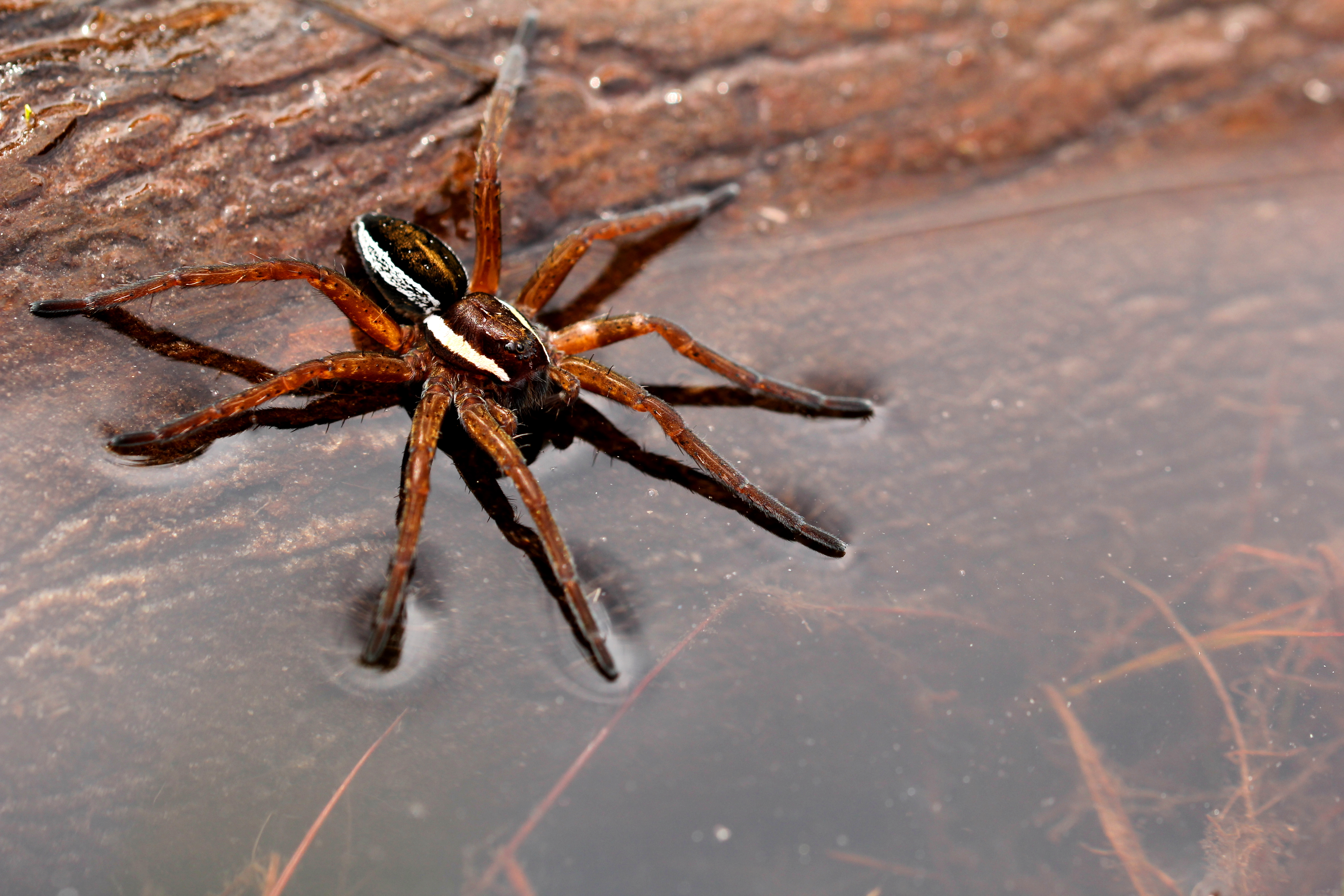
Raft Spider
Dolomedes fimbriatus
Photo: Wikimedia Commons (CC) via https://en.wikipedia.org/wiki/Raft_spider
Overview
One of Europe's largest spiders, this semi-aquatic arachnid reaches a body length of up to 22mm, with a leg span that can exceed 7cm. Females are notably larger than males and are recognizable by pale cream or yellow stripes running along the edges of a dark brown body. It hunts by resting its legs on the water's surface, detecting vibrations from prey such as insects, tadpoles, and small fish, which it then subdues with a venomous bite.
As a predator of invertebrates and small vertebrates, it plays a role in regulating wetland food webs, while females' distinctive nursery webs, built to protect egg sacs and spiderlings, are a characteristic feature of its breeding sites.
The species occurs across much of Europe, from the United Kingdom and Ireland eastward through Scandinavia, the Baltic states, and into Russia and Kazakhstan, with populations also recorded in Australia. It depends on undisturbed bogs, fens, and pond margins with stable water levels and abundant emergent vegetation.
Its decline is driven by drainage and destruction of wetlands for agriculture and development, water pollution and nutrient enrichment that degrade breeding habitat, and shifting water levels linked to climate change. Agricultural runoff and urban expansion into riparian zones compound habitat loss and fragmentation.
Conservation responses include legal protection at national and regional levels in parts of its range, habitat restoration projects targeting lowland bogs and heathland pools, and site-based monitoring in countries such as the United Kingdom, where it is a conservation priority species. Population trends remain unknown, and given continued pressure on wetland habitats across its range, its long-term outlook remains uncertain without sustained habitat protection and water quality management.
The Raft Spider is mainly threatened by the loss and draining of the wetlands and ponds it depends on, along with pollution and nutrient runoff that degrade water quality in its habitat. Nearby farming activity and the spread of buildings and roads along riverbanks and shorelines further squeeze its living space, while shifting rainfall and water levels linked to climate change add extra strain. These pressures are ongoing and show signs of intensifying as land development and climate impacts continue.
Habitat
Inhabits shallow, nutrient-rich freshwater wetlands including pond margins, ditches, fens, marshes, and slow-moving streams with abundant emergent vegetation. Requires areas with floating vegetation mats and overhanging plants that provide hunting platforms and refuge sites near the water surface.
Threatened in Åland Islands


Frequently asked questions
Why is Raft Spider classified as Critically Endangered?
Where does Raft Spider live?
What are the main threats to Raft Spider?
Get weekly conservation intelligence
One short digest a week of the most striking species and country data we ship, plus breaking conservation news paired with our database where it matters.
Free, no spam. One-click unsubscribe in every email.