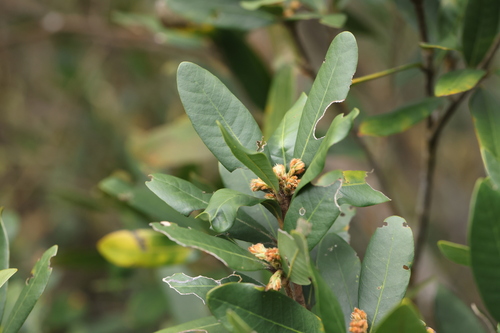
Quercus dinghuensis
Photo: (c) Yihe Chen, all rights reserved, uploaded by Yihe Chen
Overview
A detailed profile for this species is sourced from the IUCN Red List of Threatened Species as assessments become available.
Quercus dinghuensis faces severe population decline due to extensive deforestation and habitat conversion in the Pearl River Delta region of southern China. Urban expansion and agricultural development have fragmented the remaining forest patches where this endemic oak survives. The species' extremely limited distribution makes it particularly vulnerable to local environmental changes and human disturbance.
Habitat
This endemic oak species inhabits subtropical evergreen broadleaf forests in the mountainous regions of Guangdong Province, China. It typically grows in mixed forest communities on well-drained slopes and ridges at elevations between 200-800 meters.
Conservation measures underway
Other threatened species in FAGACEAE
Frequently asked questions
Why is Quercus dinghuensis classified as Critically Endangered?
Where does Quercus dinghuensis live?
What are the main threats to Quercus dinghuensis?
Get weekly conservation intelligence
One short digest a week of the most striking species and country data we ship, plus breaking conservation news paired with our database where it matters.
Free, no spam. One-click unsubscribe in every email.