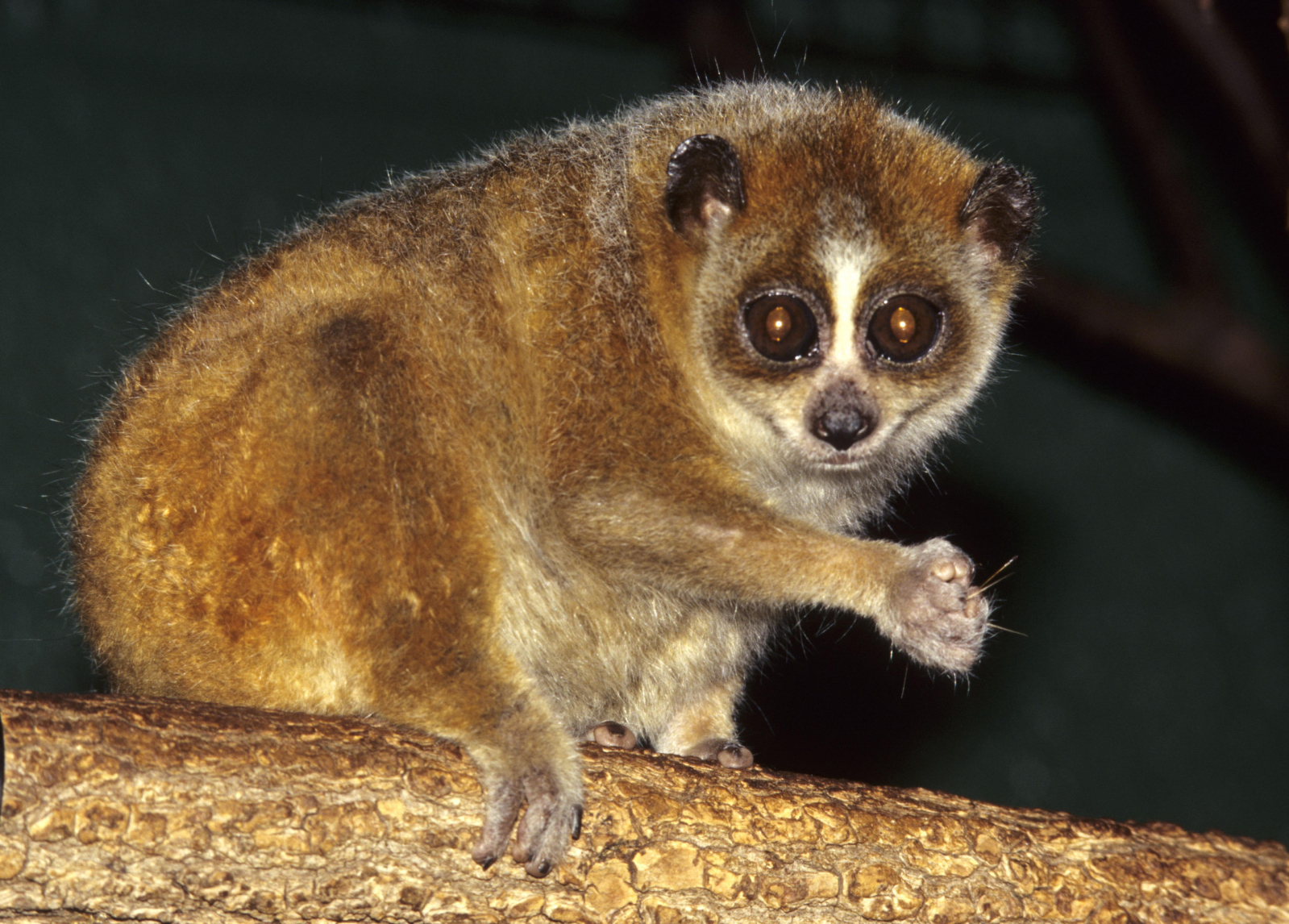
Pygmy Loris
Nycticebus pygmaeus
Photo: Wikimedia Commons (CC) via https://en.wikipedia.org/wiki/Pygmy_slow_loris
Overview
A detailed profile for this species is sourced from the IUCN Red List of Threatened Species as assessments become available.
The Pygmy Loris faces severe pressure from illegal wildlife trade, where it is captured for use in traditional medicine and as exotic pets despite its venomous bite. Habitat destruction through deforestation and agricultural expansion across Vietnam, Laos, and Cambodia has fragmented its forest home. The species' slow reproductive rate and specialized nocturnal lifestyle make population recovery particularly challenging once local extinctions occur.
Habitat
The Pygmy Loris inhabits tropical evergreen and semi-evergreen forests, preferring dense canopy areas with bamboo understory. It occupies both primary and secondary forests across Vietnam, Laos, and eastern Cambodia, typically at elevations below 1,500 meters.
Frequently asked questions
Why is Pygmy Loris classified as Endangered?
Where does Pygmy Loris live?
What are the main threats to Pygmy Loris?
Get weekly conservation intelligence
One short digest a week of the most striking species and country data we ship, plus breaking conservation news paired with our database where it matters.
Free, no spam. One-click unsubscribe in every email.