Puya venezuelana
Overview
A detailed profile for this species is sourced from the IUCN Red List of Threatened Species as assessments become available.
Puya venezuelana faces significant pressure from habitat conversion as Venezuela's tepui highlands are increasingly accessed for mining and agricultural expansion. The species' extremely restricted range on isolated mountaintops makes entire populations vulnerable to localized disturbances, while climate change threatens to shift suitable habitat zones beyond the species' ability to migrate upslope.
Habitat
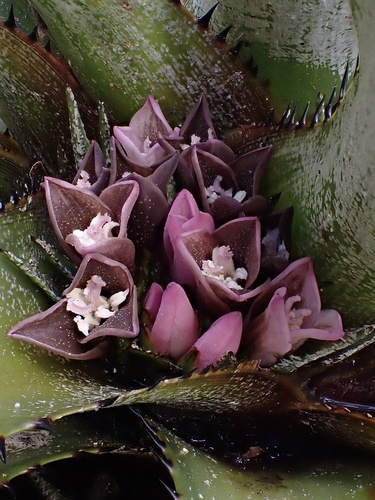
This bromeliad is endemic to the tepui highlands of Venezuela, growing on rocky outcrops and cliff faces at elevations between 1,500-2,800 meters. It thrives in the unique sandstone formations and mist-shrouded environments characteristic of the Guiana Shield's ancient mountain summits.
Other threatened species in Bromeliaceae

Frequently asked questions
Why is Puya venezuelana classified as Vulnerable?
Where does Puya venezuelana live?
What are the main threats to Puya venezuelana?
Get weekly conservation intelligence
One short digest a week of the most striking species and country data we ship, plus breaking conservation news paired with our database where it matters.
Free, no spam. One-click unsubscribe in every email.