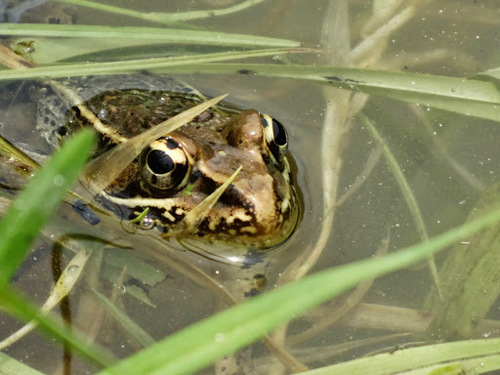
Puebla Frog
Lithobates pueblae
Photo: (c) 106757949696626451802, some rights reserved (CC BY-NC), uploaded by 106757949696626451802
Overview
The Puebla frog or Pueblan pool frog is a species of frog in the family Ranidae endemic to Necaxa River near Huauchinango, Puebla state, Mexico, where it is known as rana poblana. It was thought to probably be extinct until 2010 when Dr. Georg Hantke from the National Museum of Scotland re-discovered it.
Lithobates pueblae faces severe threats from habitat destruction due to agricultural expansion and urban development in its limited range in Mexico. The species is particularly vulnerable due to its restricted distribution and dependence on specific aquatic breeding habitats that are increasingly fragmented and polluted.
Habitat
This species inhabits montane pine-oak forests and associated freshwater streams, ponds, and temporary pools at elevations between 1,800-2,400 meters in the Mexican highlands. It requires clean, well-oxygenated water bodies for breeding within forested landscapes.
Conservation measures underway
Other threatened species in RANIDAE

Frequently asked questions
Why is Puebla Frog classified as Critically Endangered?
Where does Puebla Frog live?
What are the main threats to Puebla Frog?
Get weekly conservation intelligence
One short digest a week of the most striking species and country data we ship, plus breaking conservation news paired with our database where it matters.
Free, no spam. One-click unsubscribe in every email.