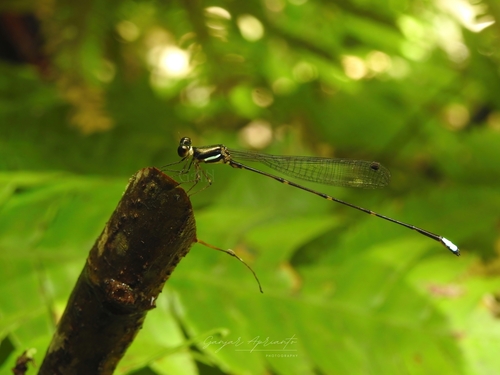
Protosticta rozendalorum
Photo: (c) Ganjar Cahyo Aprianto, some rights reserved (CC BY-NC), uploaded by Ganjar Cahyo Aprianto
Overview
Protosticta rozendalorum is a critically endangered damselfly species endemic to the tropical forests of Southeast Asia. This small, delicate insect belongs to the family Platystictidae and is characterized by its distinctive wing patterns and coloration. The species inhabits pristine forest streams and their immediate riparian zones, where it depends on clean, flowing water for reproduction and larval development.
Adults are typically found near shaded waterways within primary and mature secondary forests, where they engage in territorial behavior and mating activities. The species faces severe population decline due to rapid deforestation and habitat fragmentation throughout its limited range. Agricultural expansion, logging operations, and urban development have significantly reduced the availability of suitable breeding sites.
Water pollution from agricultural runoff and industrial activities further degrades the aquatic environments essential for larval survival. Climate change poses additional challenges by altering precipitation patterns and stream flow regimes. The species' restricted distribution and specialized habitat requirements make it particularly vulnerable to environmental changes.
Conservation efforts remain limited, though some populations may receive indirect protection within existing forest reserves. Habitat restoration initiatives focusing on riparian forest corridors could benefit the species, but comprehensive surveys are needed to better understand current population status and distribution. The critically endangered status reflects the urgent need for targeted conservation measures to prevent extinction of this endemic damselfly.
Protosticta rozendalorum faces severe threats from deforestation and habitat fragmentation that destroy the pristine forest streams it requires for breeding. Water pollution from agricultural and industrial sources degrades the clean aquatic environments essential for larval development. Climate change further threatens the species by altering stream flow patterns and precipitation regimes in its limited forest habitat.
Habitat
This species inhabits clean, flowing forest streams and their immediate riparian zones within primary and mature secondary tropical forests. Adults are typically found in shaded areas near waterways where they engage in territorial and reproductive behaviors.
Other threatened species in PLATYSTICTIDAE
Threatened in Indonesia

Frequently asked questions
Why is Protosticta rozendalorum classified as Critically Endangered?
Where does Protosticta rozendalorum live?
What are the main threats to Protosticta rozendalorum?
Get weekly conservation intelligence
One short digest a week of the most striking species and country data we ship, plus breaking conservation news paired with our database where it matters.
Free, no spam. One-click unsubscribe in every email.