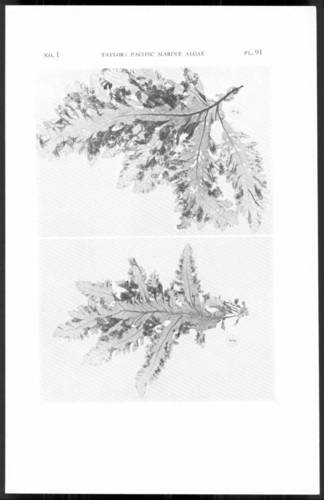
Phycodrina elegans
Photo: (c) Taylor, William Randolph 1945. Pacific marine algae of the Allan Hancock Expeditions to the Galapagos Islands. Allan Hancock Pacific Expeditions; v. 12. University of Southern California., some rights reserved (CC BY)
Overview
A detailed profile for this species is sourced from the IUCN Red List of Threatened Species as assessments become available.
Phycodrina elegans faces severe population decline due to habitat destruction from coastal development and pollution in its restricted marine range. Ocean acidification poses an additional threat to this delicate species, affecting its calcium carbonate structures and disrupting its feeding mechanisms. Climate change-induced sea level fluctuations and temperature variations further compromise the stability of its specialized benthic habitat.
Habitat
Phycodrina elegans inhabits shallow marine environments, typically found in rocky intertidal zones and subtidal areas with moderate water flow. The species requires specific substrate conditions and water chemistry parameters that are increasingly rare due to environmental pressures.
Conservation measures underway
Other threatened species in DELESSERIACEAE
Frequently asked questions
Why is Phycodrina elegans classified as Critically Endangered?
Where does Phycodrina elegans live?
What are the main threats to Phycodrina elegans?
Get weekly conservation intelligence
One short digest a week of the most striking species and country data we ship, plus breaking conservation news paired with our database where it matters.
Free, no spam. One-click unsubscribe in every email.