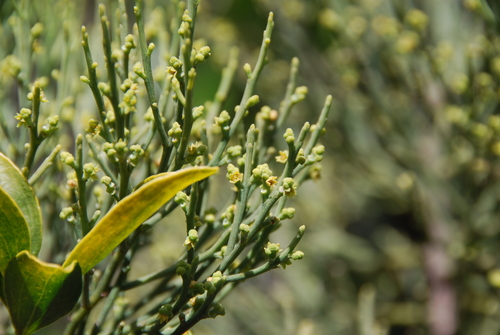
Phoradendron aequatoris
Overview
A detailed profile for this species is sourced from the IUCN Red List of Threatened Species as assessments become available.
Phoradendron aequatoris faces severe threats from rapid deforestation and habitat conversion in Ecuador's coastal and Andean regions. The species' parasitic lifestyle makes it entirely dependent on specific host trees, creating a cascading vulnerability when these hosts are removed through logging or agricultural expansion. Climate change compounds these pressures by altering precipitation patterns essential for the mistletoe's reproductive cycle and host tree health.
Habitat
This parasitic mistletoe inhabits humid montane forests and cloud forests of Ecuador, growing as an epiphyte on various native tree species at elevations between 1,500-3,000 meters. The species requires specific host trees and thrives in areas with consistent moisture and moderate temperatures typical of Andean cloud forest ecosystems.
Other threatened species in SANTALACEAE
Frequently asked questions
Why is Phoradendron aequatoris classified as Critically Endangered?
Where does Phoradendron aequatoris live?
What are the main threats to Phoradendron aequatoris?
Get weekly conservation intelligence
One short digest a week of the most striking species and country data we ship, plus breaking conservation news paired with our database where it matters.
Free, no spam. One-click unsubscribe in every email.